
Welcome home, Noel
Between July 26 and Sept. 8, 2018, a recovery team with the Defense POW/MIA Accounting Agency was excavating the site of a plane crash near the town of Wiammeville in France.
As they dug through the farmland, the archaeologists were able to determine where an American B-17 plane hit the ground on Feb. 28, 1944, recovering pieces of the plane, airmen lost in the mission and items carried with them on that tragic day.
As the team dug through the soil, they found a gold ring with a red stone reading “Dublin High School Class of 1936” with the initials “N.E.S.” on the inside.
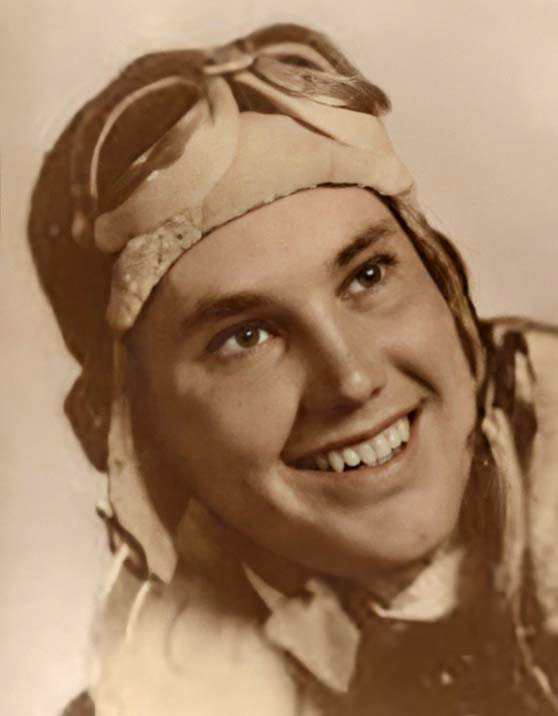
It was worn by Noel Emerson Shoup, a pilot with long ties to Erath County. He will finally be returning home when he is laid to rest in the Upper Greens Creek Cemetery in a memorial service with full military honors at 1 p.m. on Sept. 11, 2023, his 105th birthday.
The Crash
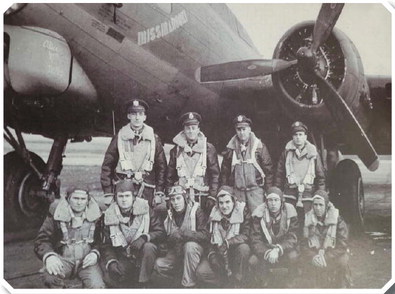
It was Noel’s first flight as squadron leader on Feb. 28, 1944, piloting a B-17F “Flying Fortress”.
Noel, along with the 22 other planes in his squadron, were on a bombing mission to take out an enemy V-2 rocket site in France during World War II.
Noel, who was pilot for the aircraft which did not have a name, was accompanied by his co-pilot James Litherland Jr. (who was also MIA, presumed dead), Navigator Byron F. Clark (survived), Bombardier Charles J. McClain (survived), Radio OperatorDonaldB.Harrison, Engineer/Top Turret Gunner Ben W. Bragg, Ball Turret Gunner William L. Jr. Hostetter, Right Waist Gunner Robert T. Gribble, Left Waist Gunner Nick Asvestos ( Survived) and Tail Gunner Harry C. Ross.
As part of the Allied bombing campaign against Germany and Nazioccupied Europe, the USAAF and the British Royal Air Force pursued a strategy in which the RAF area-bombed at night and the Americans strove for precision daylight attacks on military and industrial targets.
The day of the mission, more than 180 American B-17 and B-24 aircraft departed the United Kingdom to bomb nine V-weapon, or German rocket, sites in France’s Pasde- Calais area.
The 303rd Bombardment Group alone dispatched 23 aircraft from Molesworth, England, to strike the rocket site at the city of Bois-Coqueral.
Heavy cloud cover impeded their mission, and unable to see their targets, the squadron and more than half of the bombers turned around.
However, that didn’t stop enemy forces from shooting anti-aircraft ammunition, targeting the planes based on noise rather than sight of the aircrafts. The fact that they had almost made it back to England also didn’t stop the enemy.
When the projectile exploded at altitude, it sent out jagged metal fragments that tore through nearby aircraft and that day, Noel’s plane was hit.
His was the only one in the squadron to go down, however, 16 other airplanes suffered damage.
When the plane went down, three of the crew - Clark, McClain and Asvestos were blown free of the crash and survived. All others died.
All three were quickly captured by enemy forces and became prisoners of war, however, McClain escaped, survived in the mountains for 100 days and eventually made his way into Spain where there were allied forces.
In 2001, McClain reached out to Noel’s niece Brenda Baumert, telling her the story of what happened on the day her uncle died, sharing memories of Noel and his own story.
“It was a cold overcast day in February; we were on our way toward Frankfurt but we were having to use our instruments to navigate,” Charles told Brenda. “We could see nothing and we had been missing our targets all day. The plane was hit by anti-aircraft fire and the wing blew off. It began a slow spiral downward, and then it exploded.”
When the plane went down, the remaining crewmen were all killed, however since allied forces had not yet invaded France, search and rescue operations were not possible.
Once Germany surrendered in 1945, American investigators were able to review German documents, specifically shoot down reports, which included details of American planes and their crews that crashed in Germany or Germanoccupied territory, in this case France.
Four sets of remains were located at the crash site at Le Translay, south of Abbeville and were identified and then two sets of remains near the village of Wiammeville. These two were marked as unidentified and all were buried in the English World War I Memorial Cemetery at Abbeville on March 2, 1944.
The remains were moved in June 1945 to the United States Military Cemetery at St. Andre, France and later Suresnes American Cemetery in France where the unknown remains were designated simply as St. Andre X-452. It was there where portions of both Noel and his co-pilot were recovered, laying in rest together for 78 years, as well as from the crash site.
The man of service
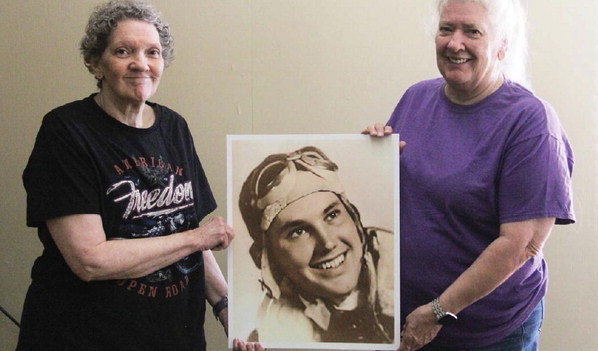
Although Brenda and Sandra Hammons never got to meet their uncle Noel, they had heard about him for most of their lives.
“I first got interested [in his story] as a very young girl,” said Brenda, remembering his picture hung on her grandmother’s kitchen walla picture her grandmother walked by several times every day.
“I was seven, and I remember asking grandma, ‘Who was that man?’ I knew he had to be significant.”
Their grandmother always described Noel as a man of great character and although he was classified as ‘Killed in Action’ their grandmother always seemed to expect he may return one day since a body had not been recovered.
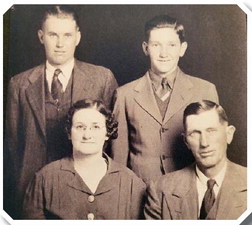
Noel was born to Arthur Warren Shoup and Lela Miller Shoup on Sept. 11, 1918 and like several in his family, he was born in a small house on the farm owned by his grandpa, Joseph Shoup. The farm was located near Chalk Mountain in Erath County, one of several communities where Arthur taught.
Brenda and Sandra said that Noel, like their father, Calvin, was raised to be a man of character with Arthur believing that a person gets a job done once they’ve committed and Lela reading daily passages to her children from the Bible.
Arthur left teaching to start work for the soil conservation service in 1934, leading Noel to attend Dublin High School in his senior year and graduating in 1936.
After graduation, he went to Texas Tech and was set to earn a government degree in May 1942 but felt the call to enlist mere months before walking the stage, so he never got to hold his degree.
Brenda said their cousins talked about missing Noel and what a great man he was at the Shoup family reunion in Stephenville every year.
“Nobody ever said anything bad about him,” said Sandra.
The sister thought that maybe their uncle had been “placed upon pedestal” due to the circumstances of his short life and tragic death. A surprise phone call from Charles McClain in Noel’s unit nearly 60 years after the plane crash confirmed what everyone had said. Brenda asked if Noel had a girlfriend overseas or liked to socialize.
“No, Noel never went into town on weekend passes,” Charles responded. “He didn’t smoke, and he didn’t run around chasing girls like most of the other guys did. In his free time, Noel just stayed in the barracks, wrote letters home and studied how to be a better pilot.”
“We knew grandma would have been proud about that,” said Sandra. “He was just exactly like she described him.”
By all accounts, Noel had left a lasting impression in his 25 years so his absence was felt fiercely by those who knew him when he vanished following a crash into a French pasture on Feb. 28, 1944.
Brenda and Sandra tried to give the family some closure with a memorial service in the Upper Greens Creek Cemetery in 2006. She expected that to be the end of Noel’s story but an email to Sandra more than a decade later led to unexpected news.
The recovery
“I got an email wanting to know if I was related to Noel,” said Sandra. The sender reported to be a genealogist working with the DPAA branch of the Department of Defense in identifying the remains of servicemen who went missing in action.
Sandra remembered telling Brenda that the email felt like a scam, but Brenda thought it might be real when they said they were going to cover all costs in the investigation.
The DPAA who lists its mission as providing “the fullest possible accounting for our missing personnel to their families and the nation,” traveled to the site of Noel’s crash and recovered remains there as well as from the remains marked St. Andre X-452.
They were able to harvest and sequence DNA from the recovered bone fragments and were looking for DNA from living family members in order to correctly identify them.
As Noel’s most direct descendants, the Department of Defense was reaching out to Sandra and Brenda who were able to help them find a cousin to provide a sample because they wanted a male relative with a Y chromosome to match with Noel.
The sisters feel fortunate that the site was relatively clean compared to some operations like the “Punch Bowl” in Hawaii where the remains of countless soldiers need to be sorted and identified.
Sandra and Brenda were told that when the DPAA asked about the crash site, locals knew exactly what they meant and where it was.
The records kept of the remains that were interred by both German and American forces also assisted greatly in matching up the bone fragments leading to the identification of Noel and copilot James Litherland Jr.
Brenda reported attending more than one meeting the DPAA holds for family of the nearly 82,000 American soldiers still unaccounted for.
At one of the meetings she saw a grandfather and a grandson who was about 18 or 19 in attendance.
Brenda said the grandfather was teaching her grandson about the recovery effort for their lost family member, because “I won’t be here when they recover him.”
The road between someone going missing and getting answers can be long but the DPAA continues to work its way into giving families the answers they seek.
Sandy remarked on their grandmother’s belief that Noel would still come home even after she was told that he couldn’t have survived and was listed as KIA.
“I think about my grandfather,” she said. “He had to live in the shadow of a ghost.”
Shoup, like many who gave their everything in service of their country, lived a short life which was given thousands of miles away.
He is returning nearly 80 years later in a memorial service open to the public so he can be remembered and honored by all.
His story will be shared afterwards at the Dublin Historical Museum.