
“I think a lot of us got shut down in 2020; we’ve forgotten that the outdoors is our release,” said Middle Trinity Groundwater Conservation District Public Relations and Education Outreach Director Stephanie Keith.
Keith feels that the “Ditch” being constructed in the lot next door to the MTGCD office on Wolfe Nursery Road in Stephenville will be the perfect outlet for educators, students, families and the public to experience native plants and wildlife while educating the public about the integral nature of groundwater and how it interacts with the local environment.
Keith reported that the main feature of the property, which the district has been planning since it started acquisition in 2019, was a storm wastewater ditch. Using that feature, Keith and the district are developing a carbonneutral, net-zero outdoor educational environment built around the ditch’s riparian zone.
Keith said the lot will educate through nine learning nodes that will offer unique experiences.
The first is a pollinator garden that will be teeming with native plants designed to attract and benefit pollinator species. With reports of diminishing bee and monarch butterfly populations, Keith felt it was important to reflect them in the urban prairieland.
In the middle of the garden will be “The Buzz,” where people can sit and “just watch life around them” on a strip of native grass.
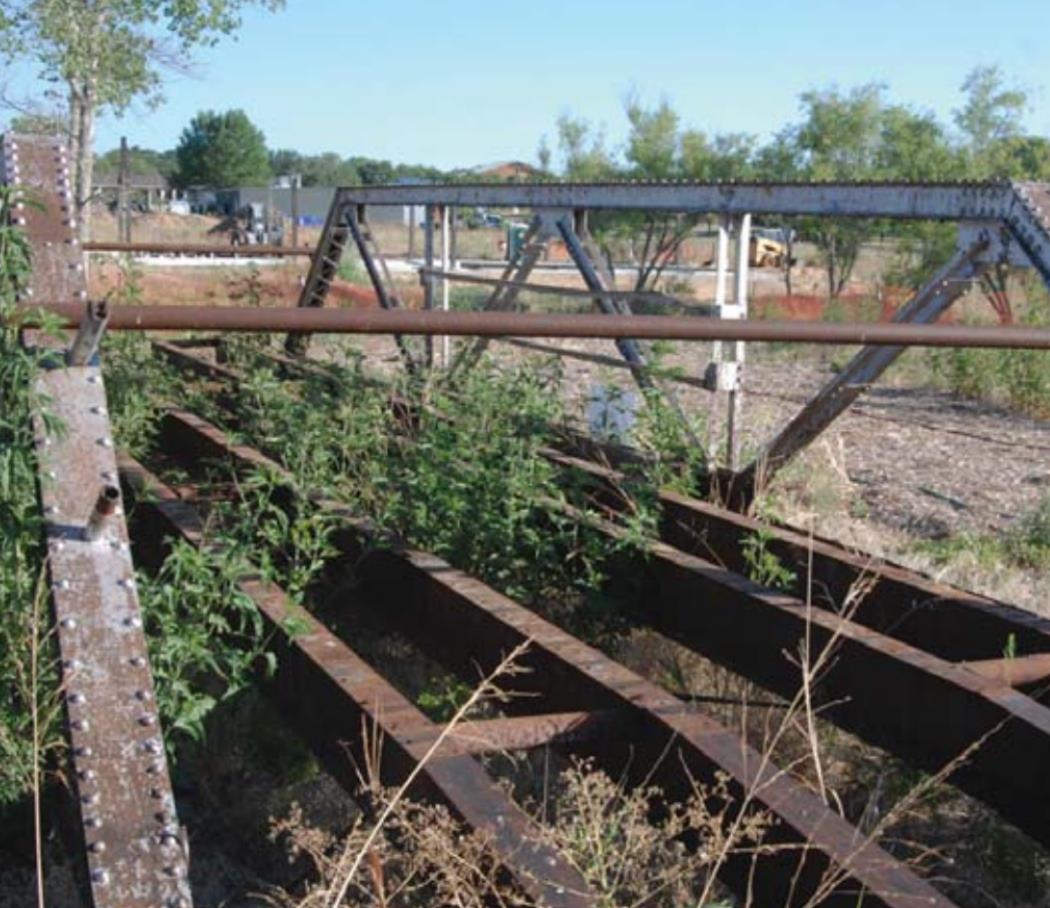
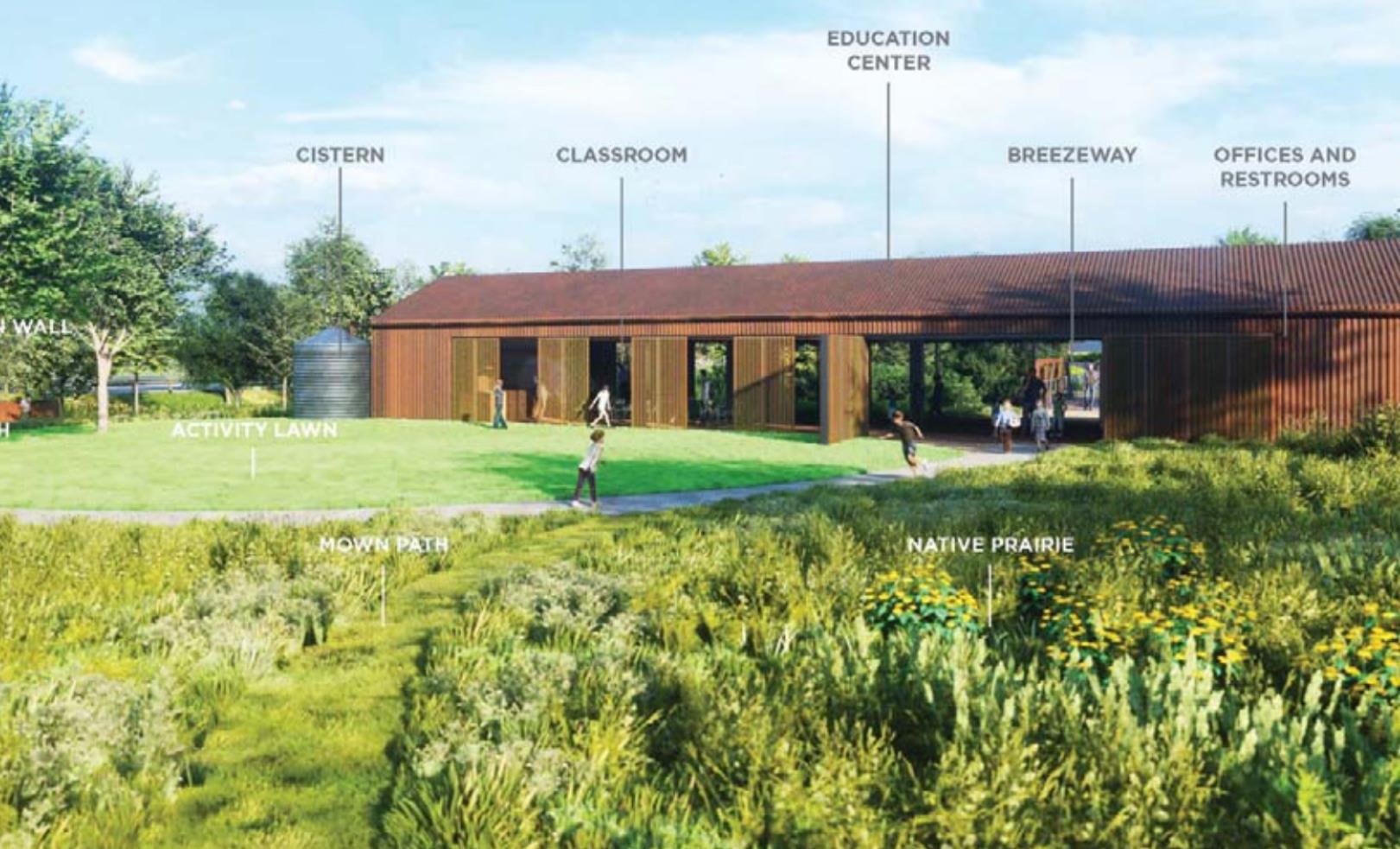
Two of the principal features of the property will be the reclaimed 1900 steel truss bridge that was once used on Collins Street in Stephenville and the Recharge educational building just beyond the bridge. Locally sourced steel beams (nothing further than 500 miles away) have begun to shape that structure in recent weeks.
Once completed, the solar-powered building will house an office, restrooms and classroom for events. A cistern is being installed in the front to capture and use rainwater on the property as well. Keith reported that plans included maps of MTGCD’s member counties (Erath, Comanche, Coryell and Bosque) with steel tubes marking the concentration of wells so visitors can better see how many benefit from the groundwater in the district.
This will be further illustrated on the front side of the property in the Confluence, a rammed earth wall designed to show how the five layers of the aquifer work together.
On the back side past the Recharge will be the Overlook where visitors can see the entry of rain water into the riparian zone and native Indian grass will be used to delineate the water’s path and how it and the prairieland interact with each other.
A large scale bird nest is planned past that on the path, leading to the Rootsthree concrete culverts displaying two scale root structures of three native plant species so visitors can really see how in-depth they go.
Following the path past the Confluence and the lowwater portion the Ditch will take guests to the Spin which uses switch grass to follow the path of an actual pivot, lending to agricultural perspective of how water is used.
Keith said the property will be full of educational opportunities for teachers and they will implement TEKS to support classroom lessons.
The property is not limited to field trips though as it will be free to the public, offering a place for everyone to learn about the local environment or just to sit and/or have a picnic.
The only condition Keith has is that everyone practices to “leave no trace.” MTGCD is setting the example already as they are sorting everything from materials to construction crew refuse during the building phase. Eight inches of mulch have also been placed for the crews to travel to limit the compaction of soil, and they are using loweremission equipment and limiting the hours that they are run.
Workdays are now being run to clean and prepare 8600 Thurber bricks donated by the city of Stephenville for the building’s porch and parts of the path. Keith works on the bricks several times a week and welcomes any who would like to assist.
“The most exciting thing [about the Ditch] is to experience the prairie and all the diversity of life that’s in that prairie, “ Keith said when asked about the project.
Since starting the project, there have been tracks and sightings of raccoons, deer, grass snakes, moths, butterflies, dragonflies, spiders of all sorts, hawks and a variety of birds.
The project has suffered several delays due to the pandemic, shortages and recently the drought, but the property is finally beginning to take shape. It’s obviously a passion project which hopes to inspire a love of nature and its conservation.
For more information or to volunteer to help with the Thurber bricks, call 254- 965-6705.