
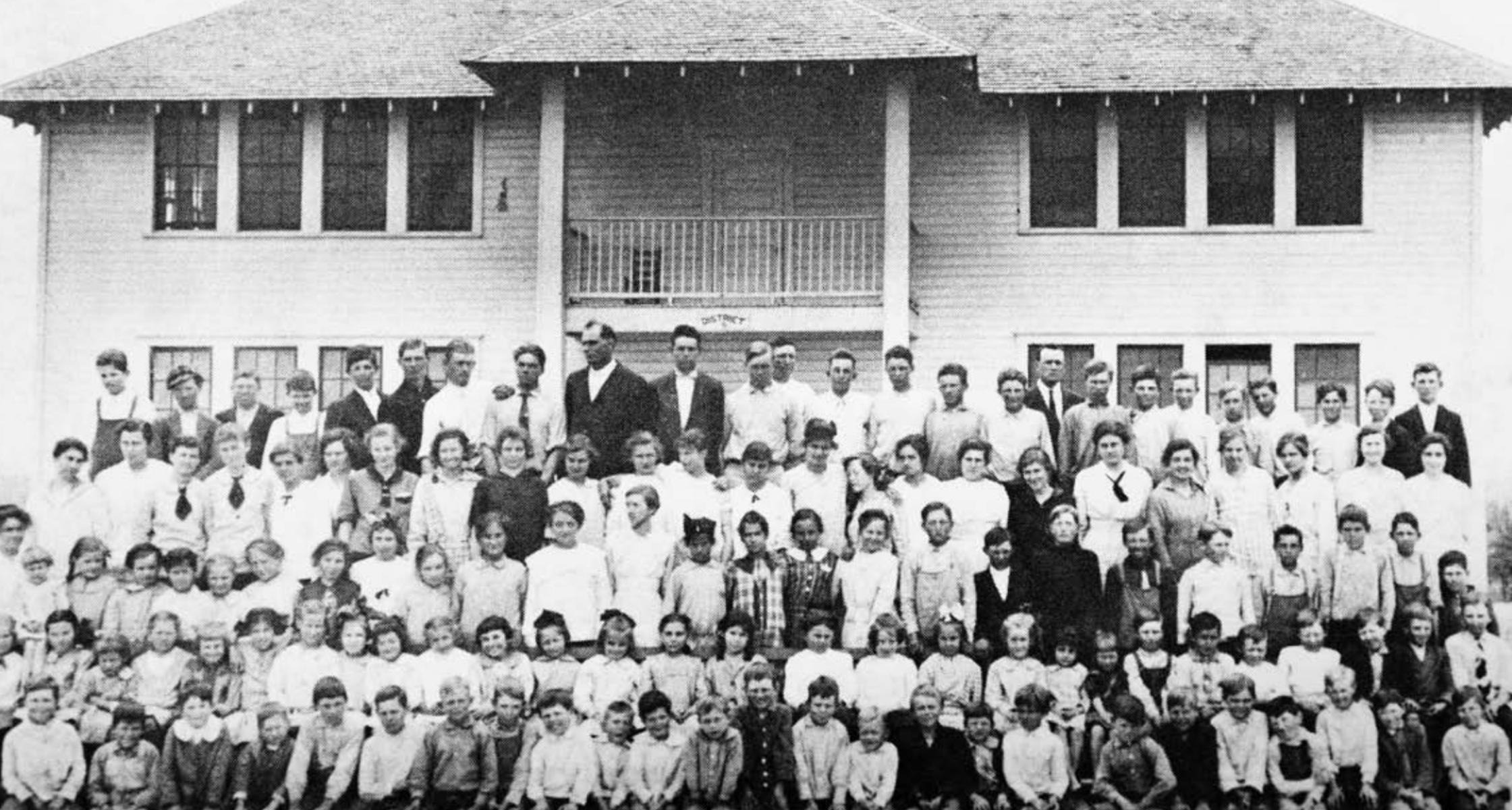
If you have never been through it, the community of Bunyan is located 6 miles north of Dublin on highway 219 between Dublin and Lingleville. Settlers started moving there about 1878.
“Bunyan was named after a pioneer Methodist preacher who came this way”(p100, Grand Ol’ Erath, Grady Perry)
In the September 23, 1938 Dublin Progress, an article by Mrs. Alice Whitten was published. In it she described the community. “There were camp meetings in those early days, when religious services were held under the brush arbor. The town later built two fine churches, a Baptist and a Methodist Church. “
When the first little schoolhouse was completed the builders stood around and asked, “What are we going to call it?” Perry Corbell shouted “John Bunyan’s Academy!” The school house had to be later enlarged by adding a room. A new two room building was built in 1905. Still later in 1913 a fourth room was added and an auditorium built upstairs. It had four teachers and was considered to be one of the finest rural schools in Erath County. They had classes for all 11 grades. At one point the school had an enrollment of about 140 and a home for the teachers. The building either burned or was torn down and a one story school was built later. (p.101 Grand Ol’ Erath, Grady Perry)
They had a number of blacksmith shops over time. The first blacksmith shop was next to Grandfather Davenport’s home. The blacksmith shop was later moved up to the highway until it was later closed.
In 1893, the community had a general store and post office run by Jim Bostic. It was later sold to W. M. Gibbs in 1895. The mail was carried out at that time by D. W. L. Cathey using a cart. A flour mill was operated by Billie Davenport. Bunyan also had a cotton gin operated by Joe Davenport. This was when cotton was the cash crop for the area. During the ginning season the community was filled with wagons loaded with cotton. The general store did big business and was quite a busy place at that time. Bunyan had it’s own telephone exchange built by Edd Bailey and later run by the Cannons and the Cooks.(p101-102 Grand Ol’ Erath, Grady Perry)
A great variety of crops were exhibited by the Bunyan folks at their own community fair and also at different fairs throughout the country. “The fair at Bunyan this year (1928) promises to be the biggest and best yet given. Much interest is being placed in exhibits of all sorts and those who attend are promised a number of surprises.”
“The farmers not only raised the items they needed, but also pure bred cattle, hogs and poultry. Nearly every home had a flock of of fine turkeys and pure bred chickens. Homes also had orchards and a good garden. The most up to date and scientific methods were used in canning and preserving their food. Cellars were full for winter and occasionally a beef was killed and canned.”
“Bunyan has sent forth many of its young people into the world. who have made a name for themselves and are useful and worthy citizens; well prepared to carry on the good work started by the early Bunyan pioneers who have built so well.” (Mrs. Alice Whitten’s 1928 article Dublin Progress September 23, 1938)