
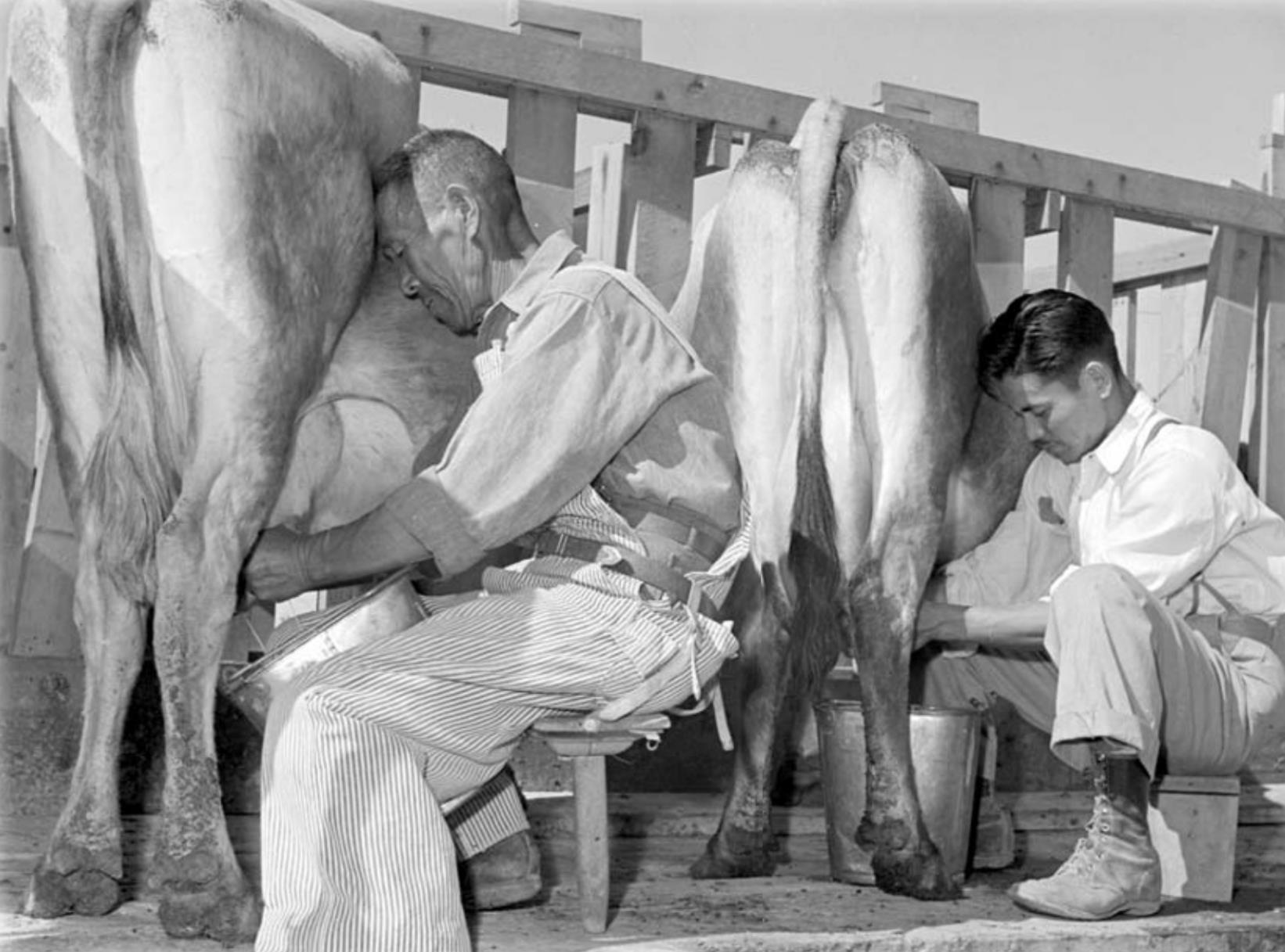
National Dairy Month started out as National Milk Month in 1937 as a way to promote drinking milk.
It was initially created to stabilize the dairy demand when production was at a surplus, but has now developed into an annual tradition that celebrates the contributions the dairy industry has made to the world.
After the National Dairy Council stepped in to promote the cause, the name soon changed to “Dairy Month.”
National Dairy Month is a great way to start the summer with nutrient-rich dairy foods. From calcium to potassium, dairy products such as milk contain nine essential nutrients that may help to better manage your weight, reduce your risk for high blood pressure, osteoporosis and certain cancers.
Whether it’s protein to help build and repair the muscle tissue of active bodies or vitamin A to help maintain healthy skin, dairy products are a natural nutrient powerhouse.
Those are just a few of the reasons that you should celebrate dairy not just in June, but all year long.
U.S. Milk Milestones
1611 Cows arrive for Jamestown Colony.
1624 Cows reach Plymouth Colony.
1841 First regular shipment of milk by rail — Orange County to New York City.
1856 Pasteur experiments start.
Gail Borden received first patent on condensed milk from both U.S. and England.
1878 Continuous centrifugal cream separator invented by Gustav De Laval.
1884 Milk bottle invented by Hervey D. Thatcher, Potsdam, NY.
1886 Automatic bottle filler and capper patented.
1890 Tuberculin testing of dairy herds introduced. Test for fat content of milk and cream perfected by S.M. Babcock.
Sherman Anti-Trust Act establishes federal antimonopoly policy.
1892 Certified milk originated by Henry L. Coit in Essex County, New Jersey.
1895 Commercial pasteurizing machines introduced.
Thistle milking machine introduces intermittent pulsation.
1908 First compulsory pasteurization law (Chicago) applying to all milk except that from tuberculin tested cows.
1911 Automatic rotary bottle filler and capper perfected.
1914 Tank trucks first used for transporting milk.
1919 Homogenized milk sold successfully in Torrington, Conn.
1922 Capper-Volsted Act codifies agricultural cooperatives.
1932 Ways of increasing Vitamin D in milk made practical.
First plastic coated paper milk cartons introduced commercially.
1937 Agricultural Marketing Agreement Act establishes federal milk marketing orders.
1938 First farm bulk tanks for milk began to replace milk cans.
1942 Every-other-day milk delivery started (initially as a war conservation measure).
1946 National School Lunch Act signed by President Truman.
Vacuum pasteurization method perfected.
1948 Ultra-high temperature pasteurization is introduced.
1949 Agricultural Adjustment Act establishes dairy support price at $3.14 per hundredweight (cwt).
1950 Milk vending machines win place in distribution.
1955 Flavor control equipment for milk is introduced commercially.
1964 Plastic milk container introduced commercially.
1968 Electronic testing for milk is introduced commercially, marking the official acceptance of process.
1974 Nutrition labeling of fluid milk products begins.
1980 American Dairy Association launches the national introduction of the “REAL”® Seal dairy symbol.
1981 UHT (ultra high temperature) milks gain national recognition.
1983 Creation of National Dairy Promotion and Research Board.
1988 Lower fat dairy products gain widespread acceptance. Low-fat and skim milk sales combined exceed whole milk sales for the first time.
1993 Mandatory animal drug residue testing program established.
1994 Recombinant bovine somatotropin (rBST) approved for commercial use in U.S. Nutrition Labeling and Education Act requires mandatory nutrition labeling.
1995 Launch of processor-funded “Got Milk”-mustache advertising campaign.
2000 Federal milk marketing orders reformed; component pricing introduced.