

Spectators at Dublin’s district track meets were likely to hear a buzzing overhead.
Many taking in the day’s events could be spotted searching overhead for a swarm of insects only to be greeted by a small quadcopter capturing video of the day’s events for posterity.
The devices are drones, specifically a DJI Mavic Mini 1, capable of flying 30 minutes on a battery before needing a recharge and capturing high definition video with its 2.7k camera mounted to the front of the device.
This video is transmitted directly to the pilot’s phone when the phone is docked into the remote control and the drone can be folded up and stored in a pocket when not in use.
Dublin coach and technology teacher Dondrei Williams campaigned for the devices when he arrived to teach at Dublin Secondary, noting the large facilities and open airspace were perfect for teaching drone flight to students.
“I saw the facilities we have here and how big my lab was; visions just started coming to me,” Williams said.
The only drone being used on campus previously belonged to a student and was used to record practices and other similar events.
The school currently has three minis while Williams occasionally lets students fly his drone that has some more advanced features.
Williams reported that 10 of his students have flown drones at least once this year with several logging a lot of hours (tracked via their phones) during sporting events.
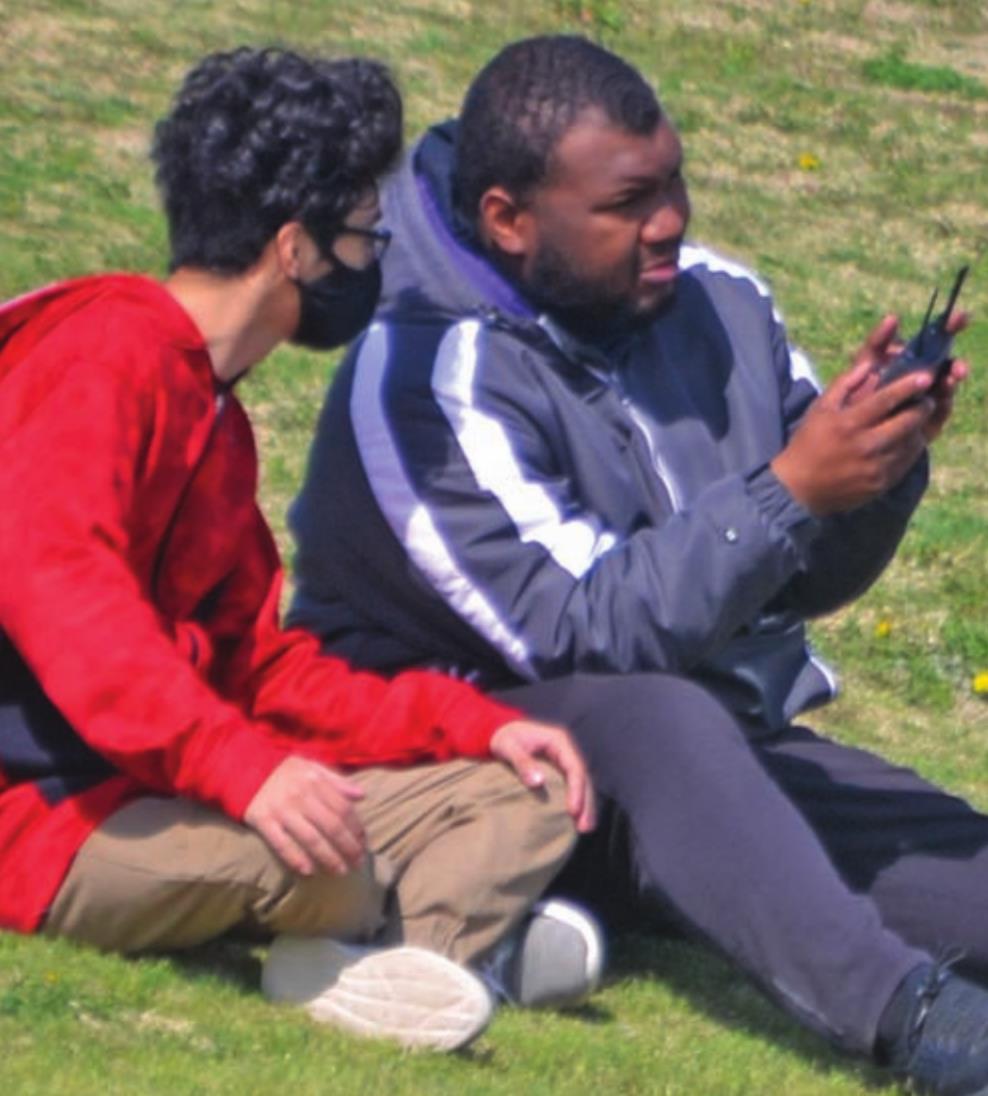
At the district track meet, Bryan Rios, Colton Moore and Raul Diaz managed to film despite some particularly windy weather.
“I’m very proud of them,” Williams said of his pilots’ performance, noting that the design of Bob and Norma Cervetto Field can create a wind tunnel, making it more difficult to keep a drone steady or balanced if the drone is following runners on the track.
As the hurdles coach, Williams reported that drone video has not only proven valuable in covering events and uploading to the Dublin Athletics Youtube channel, it has also helped in recording practices so coaches and athletes can get a different viewpoint on their form and see what they need to work on before competition.
Having the devices available is not just about sports though, Williams sees the tech as a way to open more doors for students since several careers have started using the devices, such as videography, aerial photography, land and property surveying and in construction projects from homes to high-rise buildings. The devices have also become popular with the military, law enforcement (for things like search and rescue operations) and agriculture because it lets the pilot cover a lot of ground quickly without getting into tricky terrain.
Williams is hoping to have it set up where his students can get FAA certified next year, offering more opportunities to students right after graduation.
Dublin ISD is also looking at using their tech to produce instructional aides with one proposed video project showing how to respond when being pulled over. Such projects would not only net experience for students producing the short but result in modern instructional aides.
“With this, they would learn how to plan, storyboard and edit video,” Williams said.
Dublin Secondary has been implementing a lot more video this year with livestreaming home games, capturing video with small GoPro cameras and aerial shots with drones. To see some of the work compiled by students and staff find “Dublin Athletics” on youtube.com.