
Drivers on Wolfe Nursery Road in Stephenville may have noticed an attractive piece of the prairie pop up in the last year with native plants and a building made from reclaimed local materials.
The 3-acre plot is named The Ditch Water Discovery Center after its signature feature and acts as a “living classroom” that shows natural practices that can be adopted to conserve water and help the local environment. It is located next to Middle Trinity Groundwater Conservation District, who developed the project to offer a dynamic way to educate local students and the public at large while helping the immediate area.
The community is invited to come see the property first-hand in an open house Oct. 22 from 11:30 a.m.-2:30 p.m. featuring a ribbon cutting with the Stephenville Chamber of Commerce and refreshments.
The come and go event will also have guided tours through its diverse educational areas.
Visitors will be able to see:
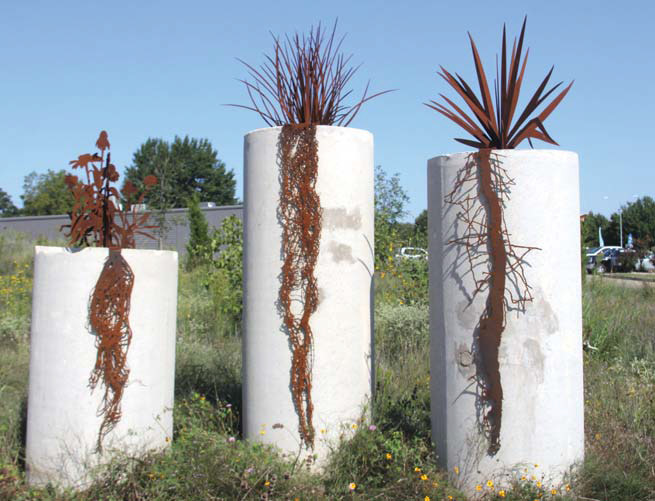
■ Native plants that help with flood control and a root system display that shows how they do it
■ Pollinator gardens that are routinely visited by species like butterflies and bumblebees
■ a single-span irrigation pivot and 1924 Chicago Aermotor windmill
■ a diverse amount of plants and visiting wildlife on the .3 mile walking path
■ a rammed earth wall mapping the aquifer formations that make up the MTGCD area
■ Wildlife such as birds drawn to the habitat and fauna
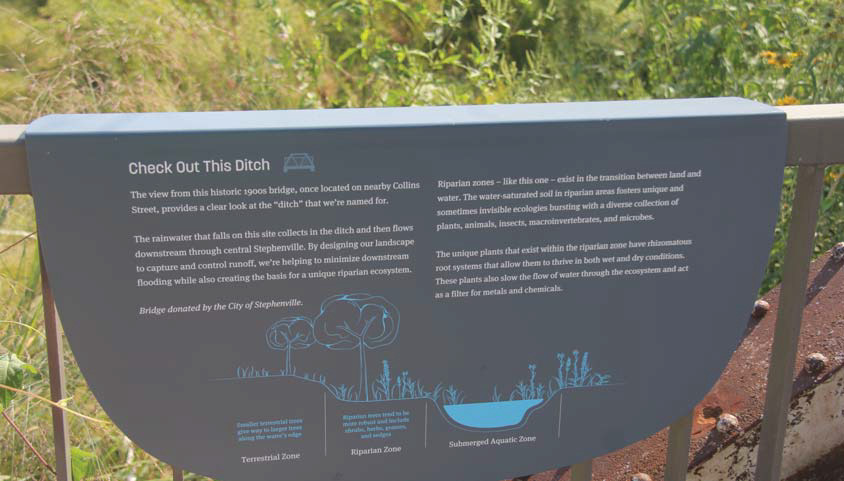
At the center of the project is the titular Ditch which can be observed on a restored 1900s steel bridge donated by the city of Stephenville. This leads to the learning center classroom, which harnesses solar power and rainwater to help irrigate the property.
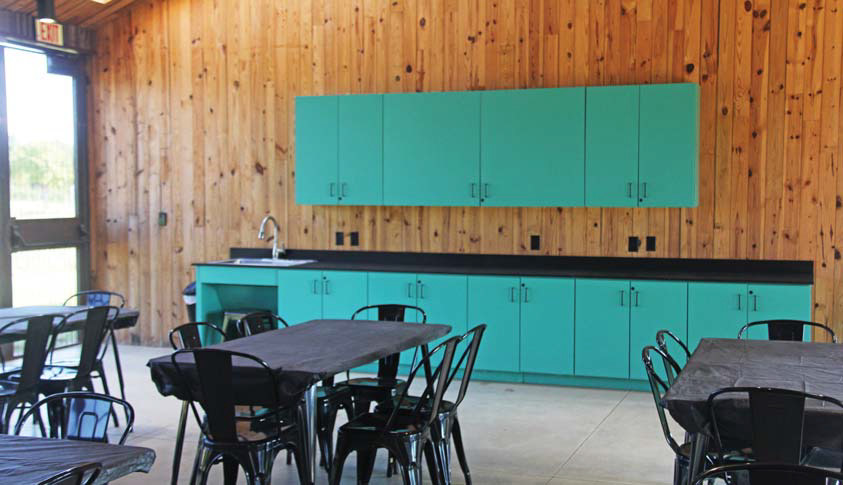
The building features Thurber bricks and reclaimed wood and is adaptable with panels that can slide to allow a breeze. Plans are for the center to be the site of free educational events throughout the year and it, as well as the turf outside the center offer a great place for conversations by visiting groups.
The building also features a large visual representation map of MTGCD’s member counties: Erath, Comanche, Bosque and Coryell. Steel tubes allow visitors to see the general locations and density of wells throughout the district.
The north side of the property features approximately an acre of prairie restoration to enhance wildlife habitat, provide erosion control and help with carbon and storm water management. There are plans for a maintained space on that side for people to observe the property.
Prairie restoration projects are often misunderstood at first due to their seemingly unmanaged appearance.
However, with time, they transform into stunning landscapes featuring waving grasses in shades of blue, red, and green. White and gold seed heads provide vital food for birds and wildlife during the harsh winter months. It’s important to remember that restoration is a gradual process—typically taking up to three years for plant species to fully establish. Throughout this period, careful monitoring and maintenance are crucial.
Stephanie Keith assured the plan is to keep it as maintained as possible to native prairie standards but reminded that the purpose of the project is to offer a natural habitat.
“Part of the reason it looks like this is because it IS a wild space,” Keith said. “It’s a habitat but also a water management tool. It allows a place for rainwater to slow down and pool to minimize the threat of flooding.”
This is assisted through the central riparian area and the extensive root systems of native plants. Keith called the turf the “Earth’s natural insulation,” pointing out that as more of an area is put under cement and developed, it becomes hotter and subject to the ‘heat island effect.’
The Ditch was developed through the Sustainable Sites Initiative and although it is a nice place to visit, Keith says it is “primarily an educational tool.”
She is eager to see people come out and use the space and she hopes people see practices they can use at home, such as planting native grass that better helps the local environment. “Your yard could feed a need,” she said.
For more information, visit exploretheditch.org.