
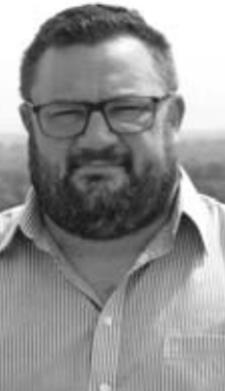
When Middle Trinity Groundwater Conservation District General Manager Patrick Wagner started the job, he was able to join his work experience with a long-standing interest in geo-science and helping preserve the environment.
“I started Jan. 3,” said Wagner, who just received a six-month evaluation and commendation for his work in the June MTGCD meeting. “It’s been an adjustment coming from the private side. Everything’s done a little differently.”
Wagner was born in Fort Worth and after high school, earned a finance degree from University of North Texas. Following college, he worked internationally for the Insurance Australia Group from 2008-11.
Upon returning to the United States, Wagner went back to school and earned a degree in geology from Texas A&M University. He used that to do geophysics work for Exxon Mobil in Spring.
It was around this time, that he met his wife, Rebecca Prater from Comanche and he ended up moving to Erath County.
Wagner was working on accounting for Prater Dirt Work, LLC when he heard about the general manager position opening up. “It was a way to transition back to geosciences that I also learned,” he said, adding that he was excited to be part of a serious conversation. “Water is a very critical issue moving forward. We all need to be educated so we can make correct decisions.” One of the main tasks presented to Wagner was being engaged with the public so he often goes out to meet with groups and organizations within MTGCD’s member counties— Erath, Comanche, Bosque and Coryell. The work is important since Wagner often encounters people who don’t know about the work that MTGCD does in managing groundwater through permitting wells and making plans to help preserve the Trinity aquifer. He also meets people that are resistant to the group since they see the state-mandated groundwater group as government control on people’s right to access the well water on their land. Wagner tries to calm those fears in saying the group works to understand how different factors affect the aquifer. “We need to first understand what the aquifer is doing and then we can make informed decisions,” he said. “Maybe we’ll find that we’re too restrictive [in one area] and not restrictive enough [in another].”
One of the ways MTGCD collects data is in monitored wells, which occasionally adds to concerns from those worried about overreach. Wagner stresses that they monitor wells for information and are not metering. “Metering looks at [how much water] you’re using,” he said. “Monitoring tells me a story of the aquifer—how it is and how it responds to pumping and environmental factors.”
Wagner reported that each of MTCD’s counties have their own identity and issues to consider and the biggest affecting Erath right now is the amount of development being done with Wagner saying MTGCD is getting plats to review all the time. Since the district approves and permits wells based on spacing, property lines and well distances are important in making sure everyone gets the access they need.
He said his favorite part of the job getting back into the science, using some experience he got from Exxon Mobil, since the reservoir data he analyzed there is similar to the well data reviewed by MTGCD. There is some complexity to the geography of each county, but he has enjoyed learning and working through issues.
Wagner is in the process of trying to make the district’s website (middletrinitygcd. org) more transparent and informative with clickable maps and hydrographs, and he is excited about the educational plans being developed such as The Ditch outdoor educational center next to the office in Stephenville.
Wagner said he is always available for questions and is open to speaking engagements. To contact him at MTGCD’s office, call (254) 965-6705.