

Ben Pate
Special to the Citizen
The land that Dublin is located on was originally purchased when Texas was a Republic. The Hollands and Dobkins were the first families to attempt to settle in this area. They came to settle on a “head-right” of land or 4,444 acres. John Rickman Holland had purchased this land from William Thomas of Harris County in 1846.
The land had originally been part of a survey issued by the Board of Land Commissions and filed in Fannin District Court in 1842 as Erath County did not exist yet. The 4,444 acres of land was purchased for $700 cash.
The first settlers found the Dublin area to be filled with lush tall grass and a wildlife paradise with plenty of wild turkey and deer. They camped on the west bank of Resley’s Creek which was teaming with fish. The Dobkins family continued to live here for two years but later moved to Fort Gates because the Indians were too hostile. (Stephenville Daily Empire Dec. 25, 1965) They returned in 1863 and tried again to brave the Indians. They found in their absence that other settlers had arrived, the Keiths and O’Neals.
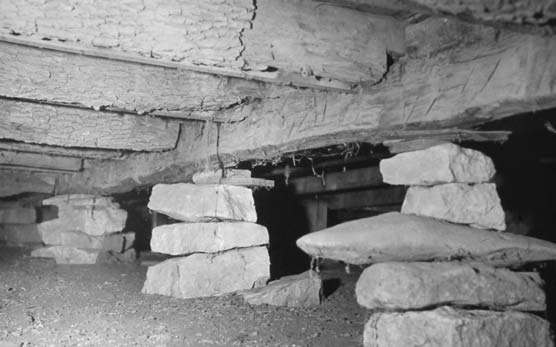
By 1870 the Indian raids were diminishing. In 1873 Mr. Dobkins decided to build a hotel as travelers were moving west by ox cart or buggy. He hitched his oxen to a cart and went to Robinson County, about 150 miles away. There, he got pine lumber for the hotel. He built one of the only three plank buildings in this area. (Stephenville Tribune, September 1930) That early lumber still stands in the historic house that was the “Double Inn.” There travelers would double-in their wagons to protect themselves from Indian raids. The hotel was completed in 1873. The large cabin had a breezeway between the two sections. That lead to the name The Double Inn Hotel. John Rickman Holland later divided his 4,444 acres among his children. (Stephenville Daily Empire Dec. 25, 1965) The Double Inn later became a “stage stand” along the Fort Worth to Yuma stage line. The stages traveled by day and night. They picked up new horses every 15 miles at Bluffdale, Stephenville, Dublin, Hasse and Comanche. Dublin was the stop where they picked up a new driver. For about a year a man named John Birmingham, drove the stage and his family boarded with the Dobkins. Travelers usually had supper in Stephenville or Bluff Dale. When it rained and the roads froze over the driver had to chain the wheels of the stage coach and let it slide down the hillsides. They kept the chains handy for that reason. (Stephenville Tribune, September 1930) (Rufus Wilson Higginbotham Pioneer Texas Merchant, p.8) The Dobkins had beds for coach occupants overnight. The stagecoach from Fort Worth usually got to Dublin around midnight. It could be later if the weather and the roads were bad. Mrs. Dobkins would bring out as many as 7 or 8 beds for the weary travelers. They were given hot food and a warm fireplace to back up to. The stage from Brownwood would usually arrive late afternoon or around supper time.
The Texas Central Railroad came to Dublin in 1880 while