
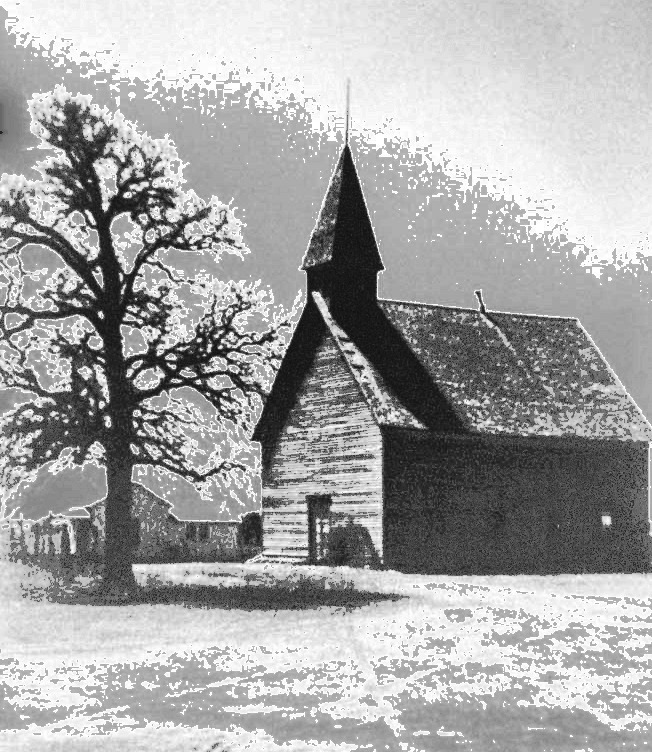
At the museum we have been gathering information about the Harbin Community. We hope to have a historical marker put in Harbin just outside of Dublin, sometime in the future.
The Harbin Methodist Church was an important part of that community. The old church was erected in 1892 shortly after the arrival of the railroad. It was the home church of Dr. Elzie Jennings, who would later became Dean of Arts at Southern Methodist University in Dallas. He would later claim the Harbin church to be his home church.
Like many old buildings, by 1943 the wood had weathered so that the church needed to be replaced. A building committee was created and work began on February 5, 1945. The church didn’t have much money to build a new one, so they took down the old church, picked out the good boards and reused them to create a new building that could continue to serve. Because of their careful watch over the project, the new church was built, for the most part, with everything paid for. The new building was dedicated on November 4th, 1945 at 11:00 AM by the Reverend John J. Norris. ( Dublin Progress, November 2, 1945) The church continued until the early 1950s when dwindling attendance resulted in the difficult decision to close it. In 1958, a group of faithful people which had been meeting in family homes in Dublin got permission to start meeting in the historic Methodist Church that was still in Harbin. After meeting there for several months, they made plans to have the building given to them, and got donations for the $500 needed to move it to Dublin.
The church was moved to Highland Ave. in Dublin, in November 1958. The Dublin Progress read “Members of the Congregational Methodist Church here have purchased the former Harbin Methodist Church building and have completed moving the structure to a site at the corner of Highland and Harris Street. The Rev. O. D. Cox, paster, reports that the church plans to remodel the building and to add an auditorium in the near future.” (Dublin Progress, December 12, 1958) The congregational church in Dublin kept the land in Harbin after the move and grew peanuts for several years. The money from the crops helped to pay for the new sanctuary and the rock outside the building. The Highland Ave. Congregational Methodist had their dedication and revival services at 11:00 AM on Sunday July 31, 1960. The Reverend Cox was in charge of the services. (Dublin Progress, July 29, 1960) Today, the Highland Ave. Methodist Church boasts a new sanctuary in front and classrooms in back, but hidden inside the center of the building is some of the original wood that was used to create a new Methodist Church in Harbin in 1892. Harbin would later have its own phone system, stores, blacksmith shops, an excellent school and cotton gin.The busy town that supported the creation of the church is gone but some memories still linger of a pioneer town that sent well educated, faithful