
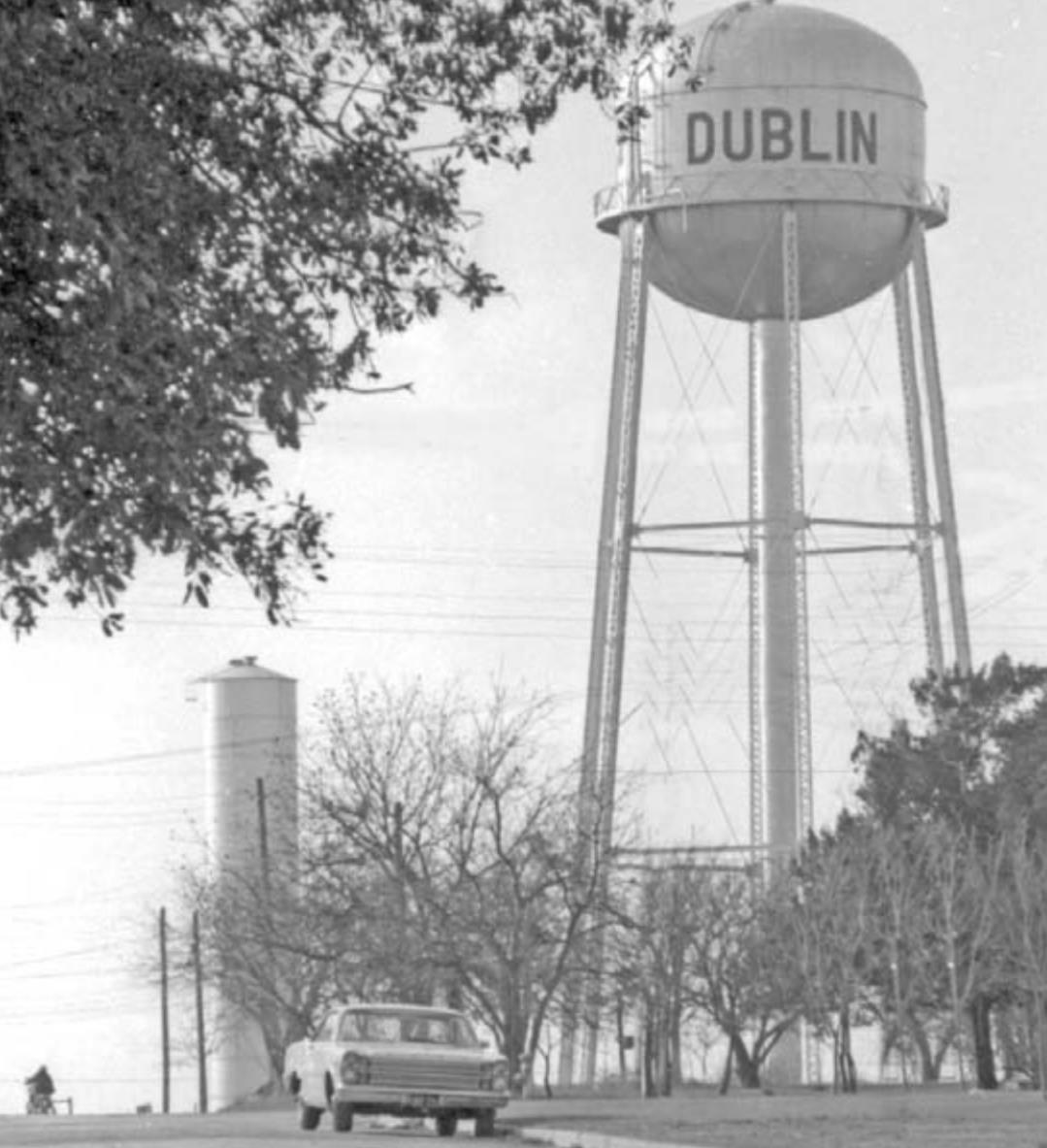
The Dublin Standpipe was built to connect with the Dublin water system and was in place in 1896.
It stood 12‘ x 60‘ and was 1 1/2 miles from the corner of Elm and Patrick Streets. (source: 1896 Sanborn Maps)(source: 1902 Sanborn Maps)
At that time, the fire department wanted more water pressure while fighting fires. The high water level of the standpipe created that additional water pressure because it was 65 feet higher than the business portion of downtown.
When there was a fire, a fireman would go to the standpipe and open the valve so that the needed pressure was available. At that time there were 52 fire department volunteers (none paid) and had 1600‘ of 2 1/2“ hose that was wound on reels and pulled on hand carts. In 1902 the town had 3 miles of 4“-6“ and 8“ water mains along with 12 double hydrants. By 1912, Dublin had 35 fire hydrants. (source: 1902 Sanborn Maps) (Dublin Progress, April, 5 1912)
As the town grew, increased water pressure was needed.
The now familiar, Dublin water tower, was built along side it on one of the highest points in town. In an article published in 1949, Sam Wolfe the City Secretary, stated that the new much larger water tower was ready to be put into use.
While the standpipe held only 50,000 gallons the new taller water tower could hold 200,000 gallons.
He warned that the taller water tower would double the water pressure in town, so if you had a small leak at your house, it was going to be a bigger problem when the water tower was put into use. (Dublin Progress, September 9, 1949)
Before the streets were properly named the street next to it was sometimes called Standpipe Street. The street name was officially changed by the City Council in 1948 to Mesquite Street.