
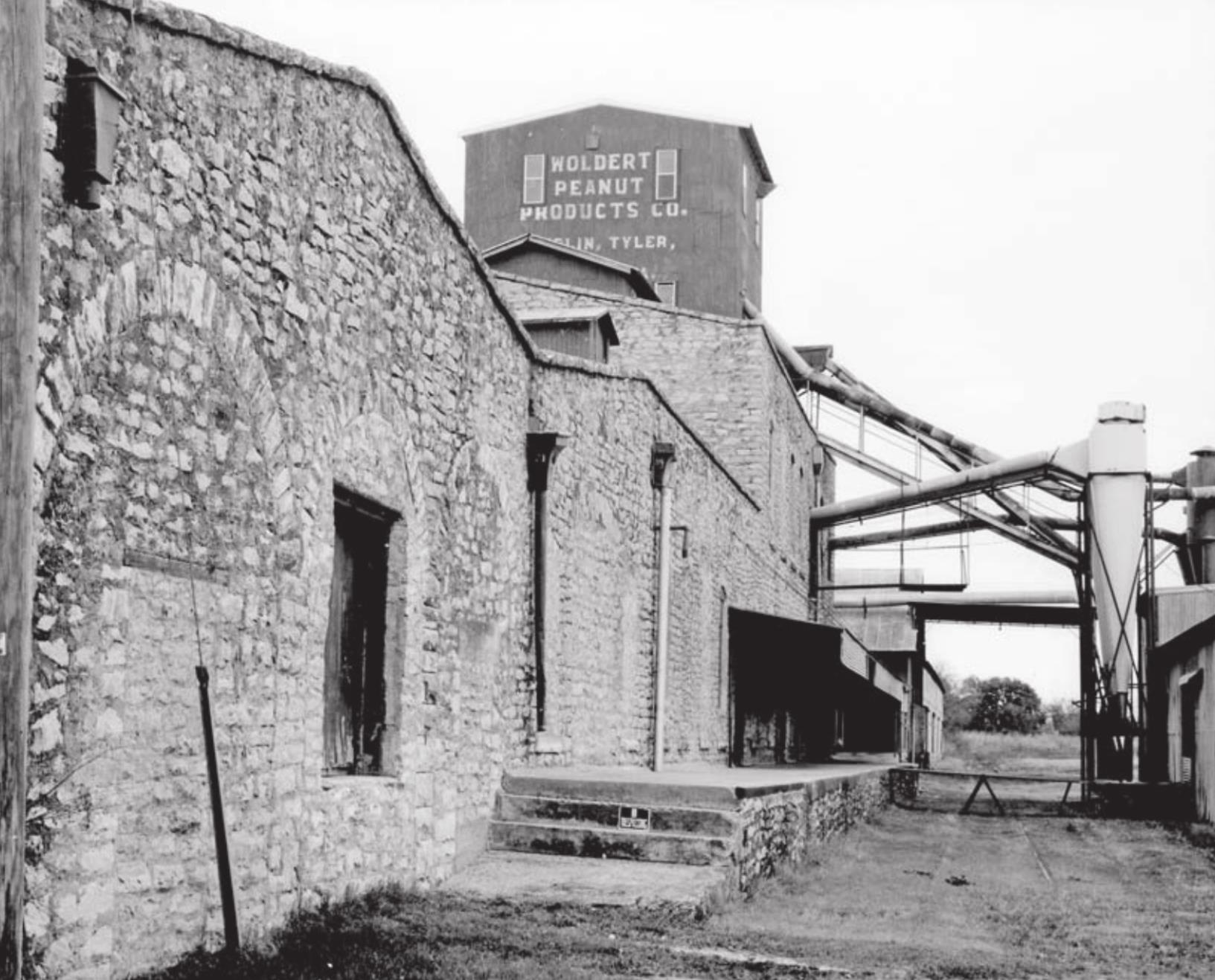
1928 was a busy time in Dublin. The city had just installed natural gas lines in 1925 and we had new brick streets in 1926. The MKT Railroad had just built a new passenger and freight station on Patrick Street that was a real show place for the city of Dublin.
It was during this time that the Woldert peanut plant was established. Dublin business men became aware that a peanut broker was wanting to open a plant in north central Texas. According to the Dublin Progress October 19, 1928, They went to work to buy the building and researched processing equipment that could be installed in the plant. Woldert chose Dublin not only because of the peanut harvest in this area, but because of the excellent railroad facilities and the aggressive citizens that wanted them to locate here. At the time it opened for business, it was the largest peanut processing plant in the state.
The rock building itself had already been there for a long time. Postcards from the early 1900s show the rock structure as an “Oil Mill.” At that time the oil was probably from cotton seed provided by the many cotton gins in town.
Dublin was a transportation center with two main highways and 3 railroads. Peanuts were being grown locally, but to keep the plant running, peanuts were also shipped from South Texas, East Texas, Abilene and Oklahoma. The finished product, shelled peanuts were shipped to Washington, California, Minnesota, Illinois, and Arizona. A lot of that shipping was by rail.
According to the June 13, 1974 Dublin Progress, the company shelled approximately 11,000 tons of peanuts a year. The peanuts were used in peanut butter, peanut candies, and other confections. The newspaper stated “Just remember that when you picked up a jar of peanut butter, or peanut candy, you may have been eating a product grown by your neighbor.”
Lee White came to Dublin in 1928 to help establish the plant and get it up and running. So he planned on being here for a month or two. Years later he was still in Dublin working as the plant manager. Along the way he met Hattie Ruth Christie and they married in 1931. I have noted in some of the earlier high school yearbooks, Hattie Ruth’s nickname was “Hat.”
Two other long time employees who spent 40 years with the company were, office manager Winfield Sanders, and Mrs. Ino Schiller who headed the inspection department.
The inspection department was not for the faint of heart. The shelled peanuts moved along a belt and the inspectors picked out the defective nuts as they passed by. Not everyone could do that job. As the peanuts rolled by it made some people dizzy. If they couldn’t do the job, they probably had to find employment elsewhere.
In 1974, a new truck dump machine was purchased that could unload 50 tons of farmer stock an hour.
They also had machines that could shell 70 tons of farmer’s peanuts a day. The shelled nuts went down chutes to a large storage room where they were put in burlap bags, weighed and stacked. It was dusty backbreaking work.
During the shelling season, the plant had 35-40 full time workers and the annual payroll exceeded $125,000.
The Dublin Progress article in June 13, 1974 told of how Lee White and Hattie Ruth were enjoying their retirement very much. With the long hours and years of hard work he had earned that retirement.
A sad note is that in the next issue of the Dublin Progress in June 20, 1974, it contained the obit for Lee White. He must have died days later after the article was published. He was an important asset for the city of Dublin. The plant that he helped to create provided important employment for decades. Of course it wasn’t just the plant that benefited Dublin, there were numerous farmers who benefited from his hard work and expertise. The farmers needed a good friend that could help them get the best price for their their hard work and investment. Lee White was one of those.