
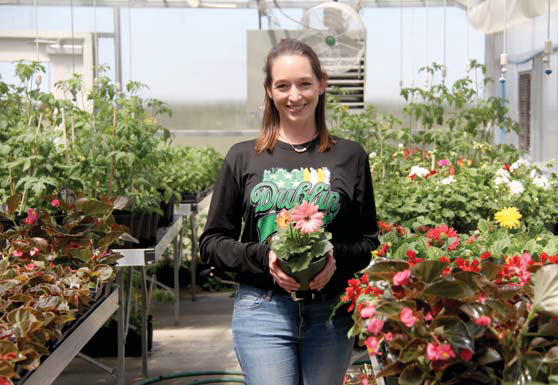
The April 12-13 Dublin FFA greenhouse plant sale offers a great opportunity for the public to see the high tech greenhouse that proved popular as soon as construction finished in November/December.
The greenhouse is located at Dublin High School near the student lot in the back.
“We only estimated we would have one class [this semester],” said Dublin FFA advisor Sophie Hayhurst. “During scheduling, we had 45 to 50 students and we realized we needed to expand it to two classes.”
“Some kids don’t have an interest in livestock or can’t afford it so this has been a great alternative for them,” Hayhurst added. “I’m excited about that.”
The 30x96 greenhouse includes a 25-foot metal enclosed head house where much of the equipment and the aquaponics set-up is housed to be out of the sunlight.
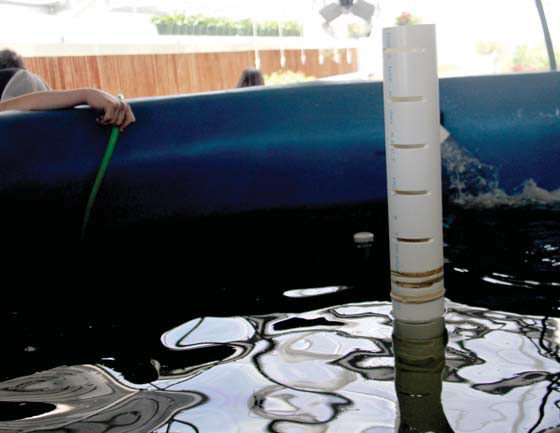
Upon entering, visitors will notice two 1,000 gallon tanks, one of which currently has 60 tilapia providing water and nutrients through pipes into the aeroponics tables, providing a fast pass for certain plants to grow.
“Aeroponics are great for growing big plants to production, not for germinating seeds,” Hayhurst explained.
Each of the tilapia donated by Tarleton State University has a name and are monitored as they are being bred to the aquaponics system sustainable. Hayhurst said the fish are about four months old and that it takes about 10 months old for them to grow to about a pound and a half. Once fully grown, the fish can be sold to keep the cycle going.
She intends to put 100 fish in each tank.
“They will hold more but we have to maintain the pH balance,” she said. “It takes about six months to get water established to actually grow any plants. We test our water every week and track nitrates. We are actually adding cleaning ammonia if they are not getting enough nitrates.”
“The goal is to put crawfish and prawns in there,” she added. “They are great little decomposers so they will come in here and help clean.” This will also open the possibility of a year-end crawfish boil to help raise money for Dublin FFA and eventually the tilapia will be sold when there are too many of them.
Also helping keep the system clean is a machine that put in a backwash every 20-30 minutes as solid waste is collected by microplastic beads before a burst of air pushes the collected waste into a funnel while sending the beads floating upwards to start the process again.
“It keeps algae from forming,” she said. “Moving water is good water.”
Hayhurst said the machine was not cheap but is “worth every penny.”
The greenhouse also has a rain bird system which distributes water and fertilizer on a timer. Heaters also insure the facility stays at 55 degrees in a cold snap and a green ‘wet wall’ is on one side to help cool the green house as Texas heat can send greenhouse temperatures as high as 120 degrees.
The facility also has a wind detector and automatically closes itself off if it gets too windy outside to protect the plants. They are also installing remote access to monitor the greenhouse when away from the campus. The automation helps by managing things after the initial programming.
“Regulation is important,” she said. “Take a look at how many greenhouses around here are broke down. Texas is not a greenhouse state. You need something that will run itself.”
She and fellow advisors Darren Price and Derek Dunlap appreciate the administration investing in the cutting edge facility and the ag students of the district.
“I know other schools can’t afford this,” Hayhurst said. “I want to brag on our admin. This is incredibly unique. There are only one or two [in the state] that I know like this.”
This investment translates to an excited staff and students. Hayhurst said her students are enjoying getting their hands dirty in the greenhouse as they manage and take care of the hundreds of plants.