

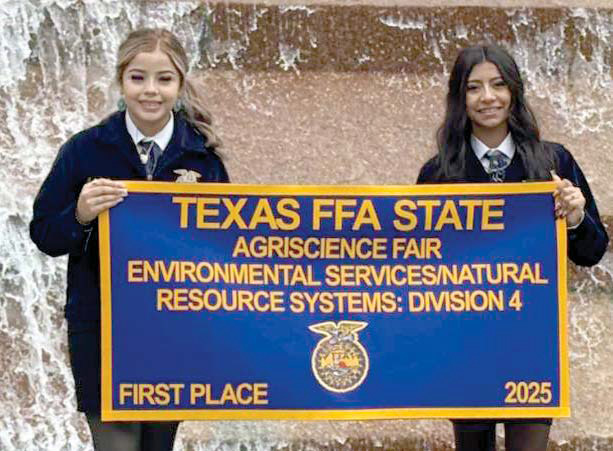
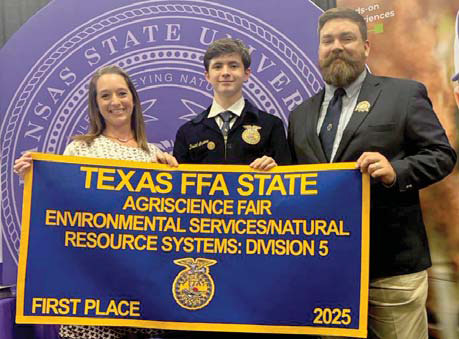
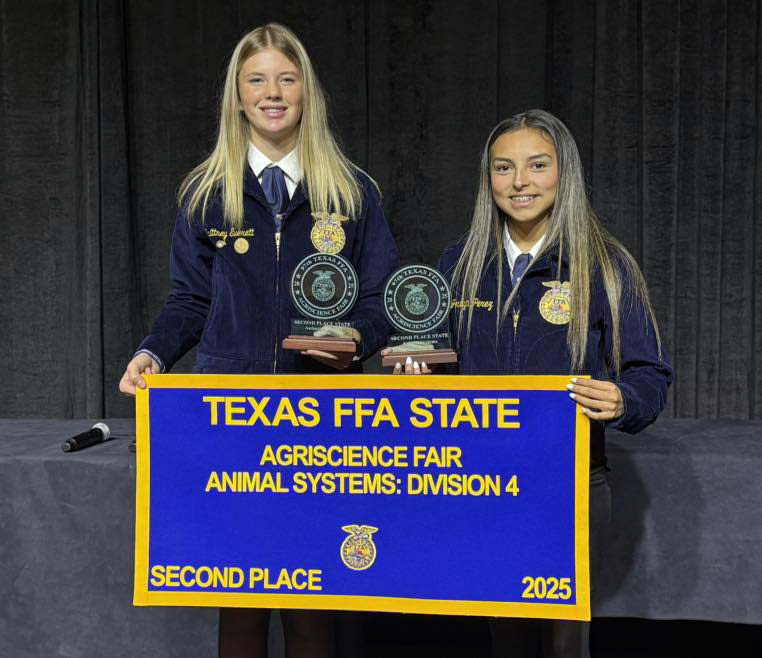
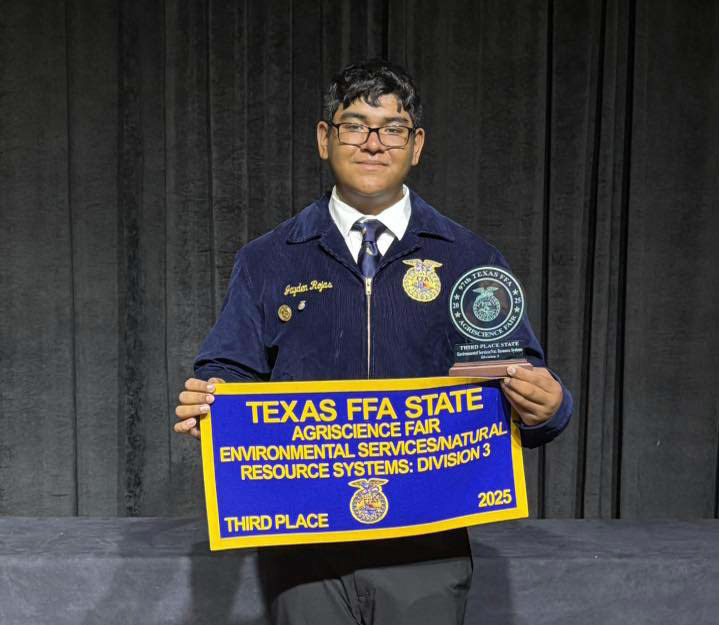
Dublin FFA has four more state champions, earning recognition for 10 months of research, writing and preparation for the agriscience fair held June 30-July 4 at the Texas FFA Convention in Fort Worth.
DHS had five teams advance to the competition based off research papers, each averaging 20-25 pages: Paul Adams in Plant Science Div. 3, David Greene in Environmental and Natural Resources (ENR) Div. 5, Zoey Soria and Isabella Cervantes in ENR Div. 4 and Brittney Everett and Jocelyn (JJ) Perez in Animal Div.3.
Systems Div. 4 and Jayden Rojas in ENR Div. 3. At the state competition, students presented their data in prepared speeches as they presented their research.
Adams, Greene and Soria and Cervantes came away with top spots in their competitions, earning a $1,000 scholarship and a chance to qualify for nationals in Indianapolis. (The Top 10 qualifiers for that competition will be announced next month.) Everett and Perez were reserve champions in their division and Rojas got third place.
“I’m super proud of them,” said advisor Sophie Hayhurst. “We competed against schools like Stephenville, Lubbock and Weatherford. It’s pretty impressive to see our kids stand up and say they were a threat to be recognized.”
Projects were picked in September 2024. Since then, students have collaborated with professors at Tarleton State University and Kansas State University and biologists through North Dakota Parks and Wildlife and at Quahadi Ranch in Lingleville.
“It’s really impressive the connections these kids got to make,” said Hayhurst.
She also said the timeline saw students practicing all through summer. “It was really intense there in June,” she said.
For his project, Adams built off the work by Nicole Foster last year in analyzing the impact a plant’s container has on its roots, finding more growth in white containers than black in 40 days under the same conditions.
Cervantes and Soria analyzed the effect of the invasive King Ranch Bluestem grass has on the soil where it grows. The grass has affected both wildlife and other crops since its introduction but Hayhurst reported it is notoriously hard to remove. The duo studied whether the grass is affecting a soil’s pH balance and making it hard for other grasses to grow.
Hayhurst said Greene’s was her hardest project to coach since he is passionate about entomology. Greene wanted to study if factors like change in weather were affecting bug diversity and populations at different elevations (with variations of about 150 feet). Since the vast majority of the world’s plantsdependonpollination, insect population is important.
Everett and JJ worked with Tarleton’s Southwest Regional Dairy Center to study over 200 cows on correlation between taller cattle and stall height and if some conditions produce hock lesions.
“We trudged through snow [in this project],” said Hayhurst about the team’s data collection. “We were committed!”
Rojas studied if there was a preference for deer between corn and milo grain since corn is more likely to have aflatoxins when subject to drought, heat stress or insect damage. These toxins create major problems for songbirds and are thought to have lesser effects on larger animals. Although Rojas didn’t find a preference for milo in deer, it was found turkeys and wild hogs liked milo more in the study.
As a coach, Hayhurst is impressed by the work her students did and said the agriscience fair program helps kids write better and express their thoughts more clearly for projects in the regular school year and into the future. She also like that it give scholarship opportunities to FFA students who aren’t as interested in showing livestock.
The first place teams will now get judged in the national competition with gold medal projects selected to compete in Indianapolis. For now, they’re enjoying the state success.
“It was fun to watch them walk across the big stage,” said the coach who has seen them working on their projects for the better part of a year.