


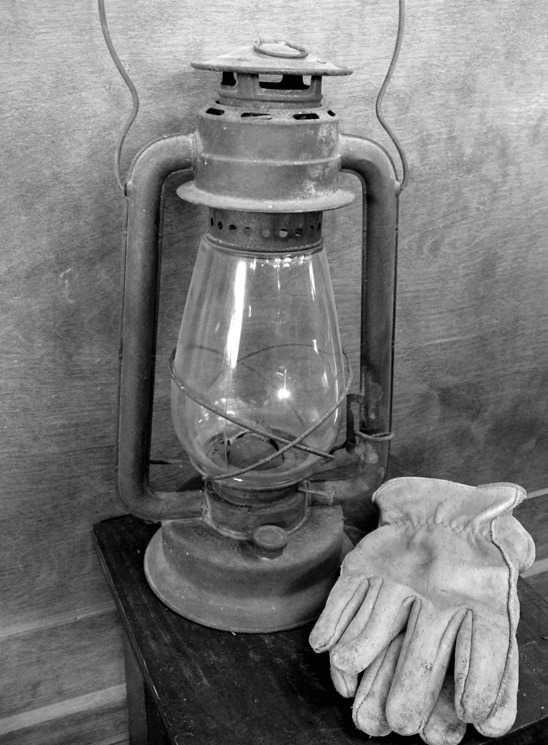
As railroads expanded across America in the mid 1800s time schedules dictated that many operations would also happen at night. Railroad cars would need to be attached to a train or dropped off at towns or businesses. The man who coupled the cars together was the brakeman. Radio had not been invented, so he communicated with the locomotive engineer with flags during the daytime. Lanterns were used at night. The signals used between the engineer and the brakeman were the same with flags or lanterns. (jeffpolston.com) Here are the basic commands used: Stop: While standing to one side of the tracks, swing the lantern left and right across the tracks Reduce Speed: Hold the lantern to one side at shoulder height.
Proceed: Move the lantern up and down.
Back: Swing the lantern in a circle at half arms height.
(railroad.scwclubs.com) Careful ordination between the brakeman and the locomotive engineer was needed to keep the brakeman safe. Before couplers were designed, a pin was dropped in place to connect the train cars together. This was a very dangerous operation with brakemen sometimes being injured or killed while stepping between the cars while dropping the pin in place. One of the great innovations was the semiautomatic knuckle coupler that locks the cars or locomotives together without a rail worker having to step between them. It was invented by Eli Janney in 1868. Many lives have been saved by using the improved device.
(Wikipedia.org Railway coupling/automatic coupling) The lantern we have in the museum was produced in 1919 as the Dietz #2 lantern. Since 1840 Dietz lanterns have been used on boats, covered wagons driven by pioneers heading west, railroad signals and farmers heading to the barn during a snowstorm. They are known by their continuous light during stormy weather. The Dietz brand of lanterns are known as the “the old reliable.” Manufacturing has been moved to China, but parts are still available. Railroad ten inch lanterns will last 10 hours on 6 ounces of fuel. (redhillgeneralstore. com) An interesting question was: Why would you put salt in a kerosene lamp? To keep the kerosene from exploding. (pioneergirl. com)
For Dublin Historical Society information scan here!