
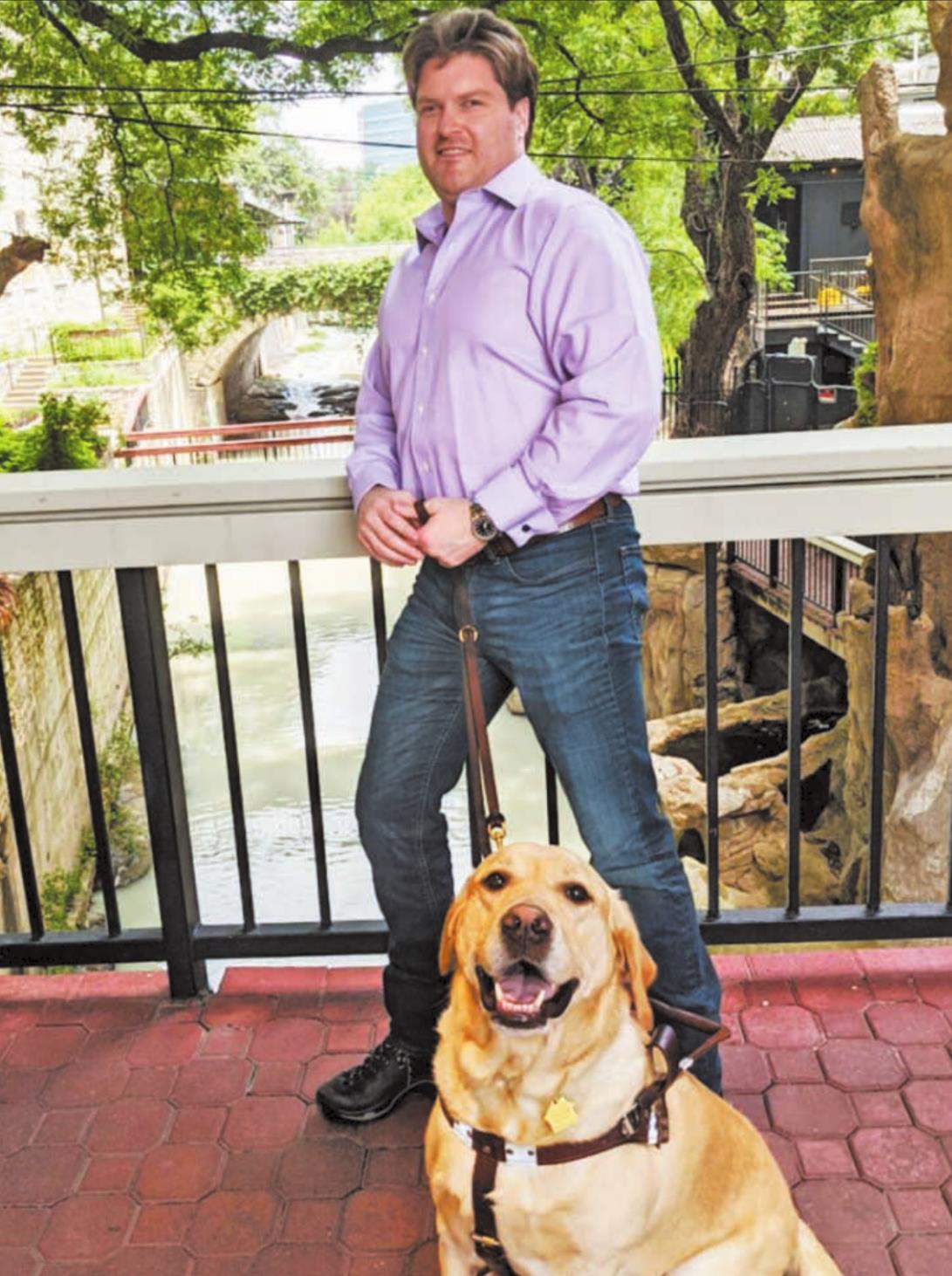
Ryon Anderson did everything he needed to do to become a lawyer. He spent years earning his law degree, studied for and passed the bar exam, and even got a job working as an in-house counsel for an engineering firm.
But it didn’t take long for Anderson to realize that he hated it. “As a lawyer, your job is to see all the bad things that might happen,” he said. “It was really affecting my personality. I wasn’t happy. It was just not a good headspace for me.”
So he left the profession and made his own way. In the years since, Anderson has made a name for himself as a business and peak performance coach in Austin, helping clients -- from the owner of a fashion magazine to the Jamaican national gymnastics team -- achieve their goals.
Anderson graduated from Dublin High School in 1999, and went to Tarleton to earn his bachelor’s degree in psychology. When he graduated, he continued on to earn a masters in counseling. “After that I didn’t really want to grow up and get a job, so I took some personality tests and they said I’d be great as a lawyer,” he said. “On a whim, I took the LSAT and got into law school.”
He had to wait a year before enrolling, though, so Anderson took a job as an instructor in general psychology at Tarleton, then went on to law school at Texas Tech.
Once he realized law was not for the career for him, Anderson began looking around at other options. “I started googling ways to make money as a business owner, other than being a lawyer,” he said. “I ended up doing fix and flips -- buying houses, fixing them up, and selling them.”
Anderson is competitive by nature. “I wanted to be good at what I did,” he said. “So I took coaching to get better as a business person. And then I was like, ‘Hey, I’ve learned all this stuff. Why don’t I do that myself?’”
So Anderson earned his national certification to work as a business and peak performance coach, and opened his own Austin-based business under the name Ryon Esquire.
“I work with CEOs, founders, startups, professional athletes, on mostly mindset stuff,” he said. “I help people figure out why they think the way they think, how to make sure that they’re doing the right things to lead to the outcomes they want.”
On the business side, Anderson helps his clients refine their customer service and marketing, and step back and look at long-term strategies.
“It’s funny because I use a lot of the stuff that you do in psychology,” he said. “I didn’t want to do counseling when I graduated from college, but I get to use all those skills I learned in school to help people who really want to change and are really trying to become better versions of themselves.”
Some of Anderson’s clients include the owner of a fashion magazine and other businesses, a model in the fashion industry, and professional athletes trying to refine their lifestyles for a competitive edge.
“I like my client base a lot,” he said. “They’re upbeat and passionate or dynamic, and they’re interested in making positive change, not only in themselves, but usually for their businesses and their communities.”
Some of Anderson’s clients are professional athletes transitioning out of sports and into a more normal life. Anderson knows first-hand the difficulty of this sort of transition, from a slightly different perspective.
When Andseron was 11 years old, he fell ill suddenly. When he recovered, he could no longer see. “Imagine being 11 years old, having to ask yourself, ‘Who am I now? What do I do? What’s my value? What skill sets do I have that can translate? Where can I get this rush that you should get from a sport?’” Anderson said.
It took years of hard work, but Anderson learned to navigate his new life. If you met him on the street in downtown Austin with his seeing-eye dog, you’d probably not even register that he couldn’t see. “My goal was always after losing my vision was to be considered a normal guy that happened to be blind, versus a blind guy that happened to be normal,” he said.
He rarely talked about it in work contexts, but a few years ago he realized that his story could help people. “I started talking about it because I think it is important for people to see someone being successful in a position that they could not imagine themselves in,” Anderson said. “A lot of people say ‘I don’t think I could do it.’ But the reality is, you don’t know what you can do if you have to. I’m successful despite being blind because the other option is to give up and die, right? That’s not much of a choice in my opinion.”
Through his business, Anderson is able to use his experience to help people overcome obstacles and deal with setbacks or the emotional aspect of losing something.
Anderson plans to continue to grow his business -- which also means improving himself. “I figure the more I grow as a person, the better I get at my job,” he said. “My goal is to be the best coach in the world. So I want clients that reflect that.”
When Anderson isn’t working, he enjoys working out, spending time with friends and family, reading, and keeping up with TV shows. His parents, Dar and Jeanette Anderson still live in Dublin, where his father owned a dairy for 30 years and his mother taught at DISD.
Anderson’s advice to Dublin graduates is to spend quality time learning about themselves. “I think the best thing that anybody can do is really try to figure out and come to grips with who you are,” he said. “How you view yourself is hugely important, just knowing those core values that really define who you are as a person. Once you realize those, then you can start viewing life decisions like marriage, career, through that lens, and it makes everything so much easier.
Editor’s Note: This column chronicles what Dublin graduates have done since high school. If you have any suggestions for other graduates, email publisher@dublincitizen. com.