
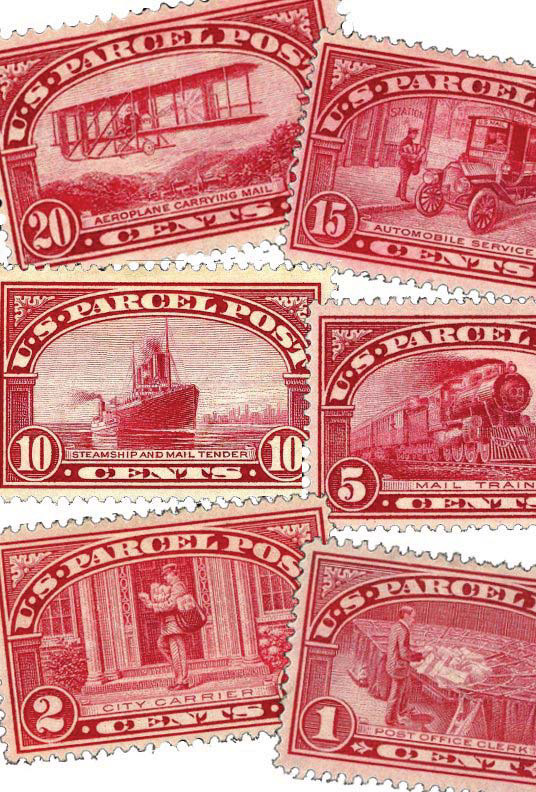

I remember as a child we wondered what it would be like to be mailed. We wondered what size box we would need and if we would need to poke holes in it so we could breath. Certainly my parents would have probably loved to mail me somewhere for a few days. When I talked with Dublin Postmaster Bill Cowan he spoke of other oddities such as mailing bricks through the Post Office, so I checked and true enough a small child was mailed Parcel Post once. Here is that story: On Jan. 1, 1913 the U. S. Post Office expanded their service to deliver packages. Certainly when the new service started, the Post Office hadn’t thought through every possible use. At that time and still today, it is legal to mail baby chicks by Parcel Post. It was on a cold winter day on February 19, 1914 that a little girl in Grangeville, Idaho wanted to visit her grandmother in Lewiston. Her parents didn’t have the money to buy her a seat on the passenger train. After all, it cost one dollar and fifty cents. There were no good roads down the mountain from where she lived to her grandmothers. Her parents found a interesting solution for Charlotte May Pierstorff to be mailed from her home town of Grangeville to Lewiston, Idaho.
Her mother’s cousin, Leonard Moehel, worked as the railway postal clerk who sorted the mail in the baggage car on that route. It was a bit of a surprise when her parents awakened her and told her about their plan. May and Leonard went with her parents to the local post office.
When May stepped on the scale, she weighed 48 pounds eight ounces. They found that she could be mailed using the baby chick rate for fifty-three cents. A tag and stamps were put on her back and Leonard took her along with other mail to the baggage car. The steam engine huffed and puffed its way down the mountain. Occasionally, Leonard would open the baggage door so May could see the mountain scenery as they traveled along. They finally arrived at Lewisville, Idaho four hours later. Since it was the end of the mail run, Leonard was able to escort May to her grandmother’s house. Since the families didn’t have telephones, it was a surprise when May arrived. So May got to visit her grandmother after all.
That is the story of May being mailed Parcel Post. At some point the Post Office found out about this and decided it wasn’t a good idea to mail children.
The story was researched and written by Michael O. Tunnell. Information came from the National Postal Museum, Lora Feueht of the Nez Peree County Historical Society in Idaho, and the Bicentennial Historical Museum in Grangeville, The Camas Prairie Railroad and Gerald Sipes.
The book is called Mailing May, by Michael O. Tunnell and Illustrated by Ted Rand. It is published by Penworthy.