
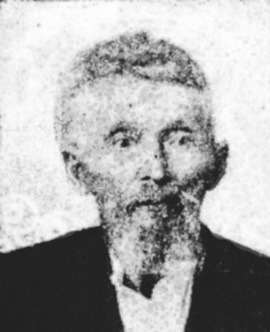
Reuben D. Ross was born on September 26, 1824 in Lauderdale county, Alabama. He was reared on a farm receiving an education in the common schools of that day. In 1865 he came to Texas and had a farm on Armstrong Creek on the line between Erath and Comanche Counties. At the time he arrived there was not a Baptist preacher in Erath County, though there was a church in Stephenville and what was called a Leon Church near Dublin.
It is hard for us to imagine the difficulties that he had at that time. He rode a large yellow horse with two pistols strapped around his waist with a bible and hymnal in his saddle bags. Indian troubles were such that he dared not travel by day but waited until night to travel to his churches. He said later, “it was one of the happiest moments of his life when he could lay his guns aside and go preach the gospel without fear of molestation.” (Dublin Progress, Anniversary Edition, September 23, 1938) In the early 1870s reconstruction policies were in force and bands were formed to enforce order in this part of Texas. One band was formed near Dublin by the Keiths, O’Neals and Morrisons. One of the Keiths and Turnbows had a falling out which turned into a feud. At one point the men from each side of the argument met and were going to settle their differences. When the two groups of men were moving toward each other, a man with a white flag walked out between them. It was the brave Rev. Reuben D. Ross who brought them together and helped settle their differences. The women of Dublin, had prayed and sent Rev. Ross to go and help before lives would be lost.
Over the frontier Rev. Reuben D. Ross was known and loved as a good true man. The frontiersmen had dubbed him “Comanche Rube.”
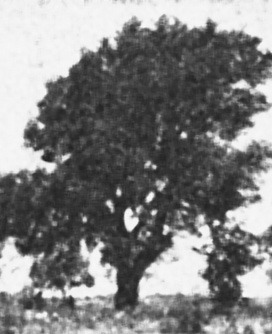
His preaching was under an old live oak tree about 3 miles northwest of Dublin. In its shade, he dissolved the Leon Church and the Dublin Baptist Church was organized in August 1872. Midge Doubleday in 1938 spoke with Mrs. Florida Burnett the only living charter member of the First Baptist Church. She had been a member of the Leon Church, but because of the antics of the young men at the time who insisted on horse racing and such, Elder Reuben D. Ross, the pastor, felt he needed to dissolve the Leon Church and start a Baptist Church. Mrs. Burnett said that they had money, because this was fine cattle country and everyone had large stock herds, but she felt they did not want to build a church because of fear the Indians would burn it to the ground. “Finally it was decided to build a church and we did so, building it on the site that our present [Baptist] church now stands. It was made of lumber and served for a time with no trouble from the Indians. When it did burn, [1914}we had to make preparations for another.”
She played an important part of the ground breaking ceremony to begin construction of the much larger church building. “On the day that work [on the new building] was to begin, the people of the church came for me and took me to the place where it was to be built. They asked me to [turn the first soil] for this church-our present [1915 brick] structure.” Her action made the connection from the very beginning of the church organization to start the construction of a new and remarkable building.
“From that time on, the church has continued to grow and it is now indeed with pride that I look upon our church knowing the hardships that we had in organizing it with only twelve members to start.” The First Baptist Church is still a vital part of the Dublin community. Members are served by a caring leadership and those in need in the Dublin area are helped. (Dublin Progress Anniversary Edition, September 23, 1938)