
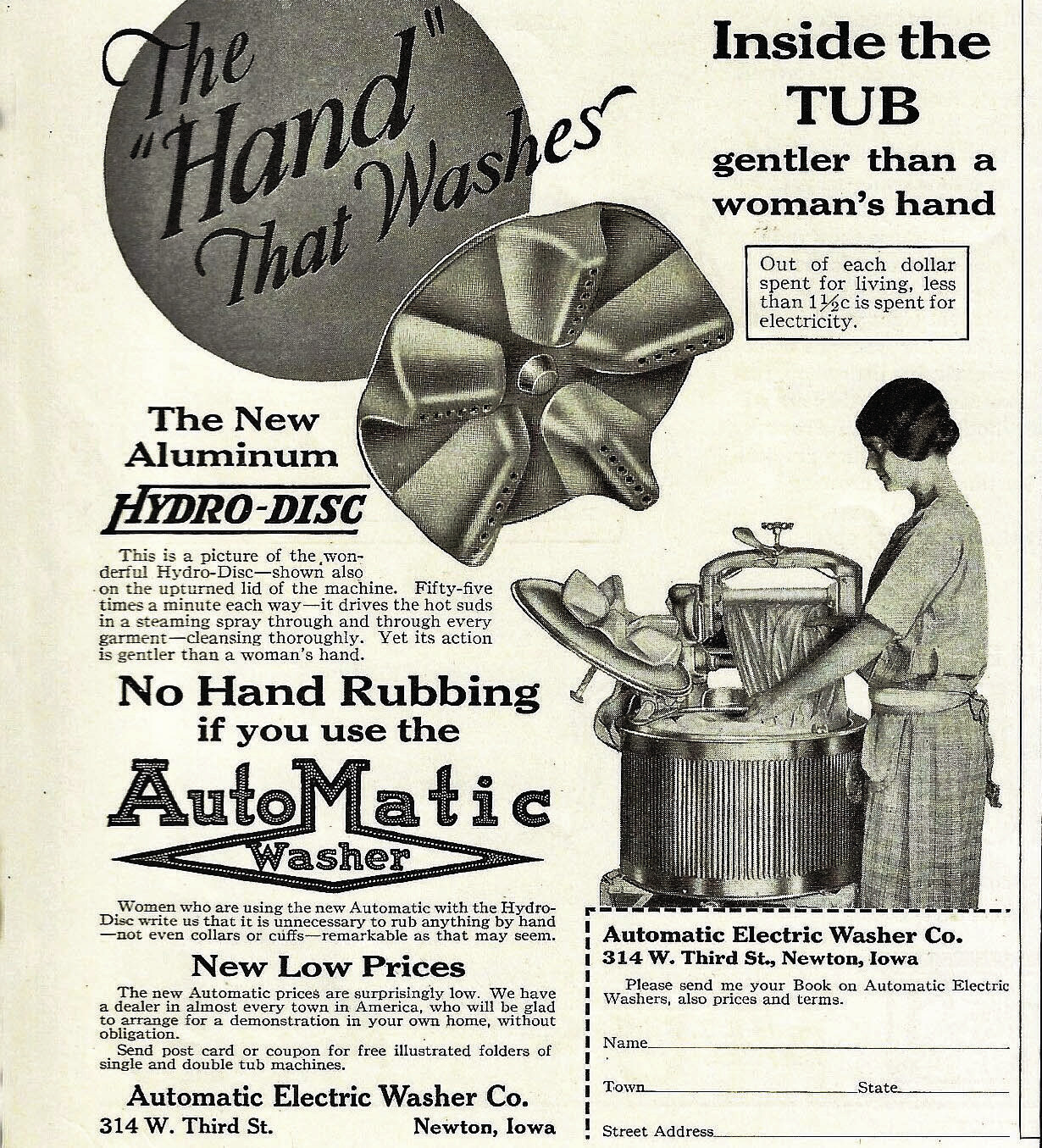
Dublin didn’t get natural gas until 1926, so the 1925 washer we have in the museum probably wasn’t all that automatic in the beginning. Heating water was probably done outside over a fire.
Wash women who had a job at home washing clothes for others were common at that time. The process of washing clothes took a long time. First they needed hot water. A pot with water was hung over a fire and heated to boiling. White cotton clothes could be boiled right in the pot over the fire. They didn’t have bleach at that time, so bluing was used. Bluing was a dye, blue in color that would be used in the final rinse water to cover up the yellowing of cotton clothes.
Colored clothes had to be washed with the same colors because the dyes would run and tinge other colors in the wash.
The clean clothes had to be sprinkled first, rolled up and put in the ice box so they were slightly damp. That would make it much easier to iron. They would be pulled out, and ironed dry one at a time. Ice boxes at that time used real ice to stay cool. Ice could be delivered on a daily basis by the ice man on a wagon. If a small child lived there, they would be assigned the job of watching for the ice man coming down the street and letting him know they needed ice. If a 5 pound block of ice was needed he would put it in the ice box for you. He would be paid in cash. As the ice melted, it flowed into a drip pan that would hold the cold water. People would drink the cold water. It was important to keep the drip pan clean so people wouldn’t get sick.
The next morning the clothes would be ironed on a flat ironing board with the smoothing irons. Smoothing Irons were little more than blocks of iron with a handle. They could be put on a wood fired stove until hot, and then used to iron the wrinkles out of the dampened clothes. Two irons were often used. One iron would be used for smoothing clothes with the other heating up on the wood fired stove. When one would cool down, they would be swapped The wash woman would press and fold the sheets and put mens shirts on hangers. It was important for mens shirts to be folded with the cuffs and collars flattened. Men who worked white collar jobs are the ones who had money to pay for the wash service.
Washboards were used when there was a difficult stain on the fabric. Early washboards were metal, but later ones used glass. The glass wouldn’t rust and was easier on the clothes. They would often use lye soap when using the wash board because it really got the stain out. Some washboards had a ledge to keep the soap from falling in the water and dissolving. Ivory soap was special because if it fell into the wash water, it would float and it could retrieved easily.
The washboards and pots all had to be cleaned and rinsed after use. Wash day was a lot of work.