

If you have ever driven down Park Street past the library, the log cabin and the grist mill, you have probably wondered why the street didn’t just go across the railroad tracks and join Park Street in South Dublin. As a matter of fact, it once did.
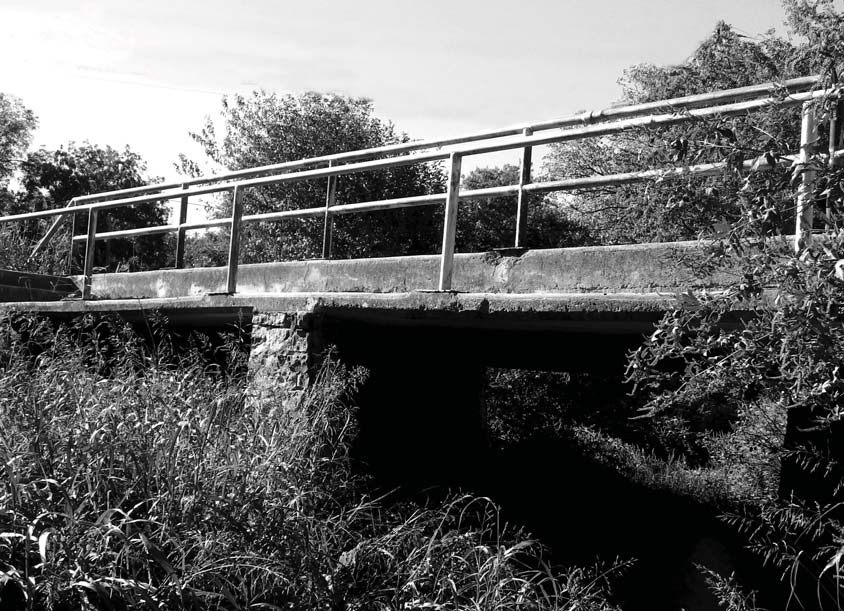
In the Nov. 10, 1922, Dublin Progress it said the City Council donated the land at that crossing to the MKT Railroad. The railroad said that it had been a problem for a long time maintaining the crossing because the railroad tracks, the street and Resleys Creek all merged at that one spot. The crossing had not been used for many years. During that same council meeting, the railroad had abandoned and donated to the city several lots close to the tracks. The lots donated included a parcel of land that provided the land and “right of way of the handsome new bridge across Resleys Creek where Patrick Street south is blended into [O’Neil then Park Street] north”. That solved a problem because the new bridge had been built on land the city did not own. A wooden bridge was previously there. The wooden bridge was short and forced a sharp turn that some drivers had trouble making. The gentle curve of the new bridge made crossing the creek easy.
If the bridge was new in February 1921, that means that the bridge was built before any of the streets in town were bricked. The main part of downtown Dublin was bricked in 1926, so this bridge must have been bricked after that.
Originally, South Park Street was the main road out of town going to Comanche. As recently as the late 1940s, what is now known as South Patrick Street did not exist. All of the southbound traffic had to make the turn and go over the bridge. This little bridge must have handled a lot of traffic especially during World War II. Troop caravans from Camp Bowie in Brownwood would pass through Dublin on their way to Fort Worth for military training. I know of one soldier who saw the quaint town with its beautiful brick streets lined with Pecan trees and returned here to live after the war.
The original name for Park Street was Sackville. Sackville was an old Irish name that was given that street when Dublin was first laid out. It may have been a name that saloon owner Mike Cagney gave the street after he wrote the mayor of Dublin, Ireland to send him some street names from that Irish city.
The O’Neil-Sackville Bridge was expensive to build, so how was Dublin able to do it? It is all part of an interesting story about one of the first Texas State Highways ever built passing through Dublin. The bridge was part of State Highway 10. Stay tuned.
We are always grateful for our volunteers. It is their hard work and dedication that allows the Dublin Historical Museum to stay open. If you are wanting to help us at the museum, let us know. We are always needing help.