
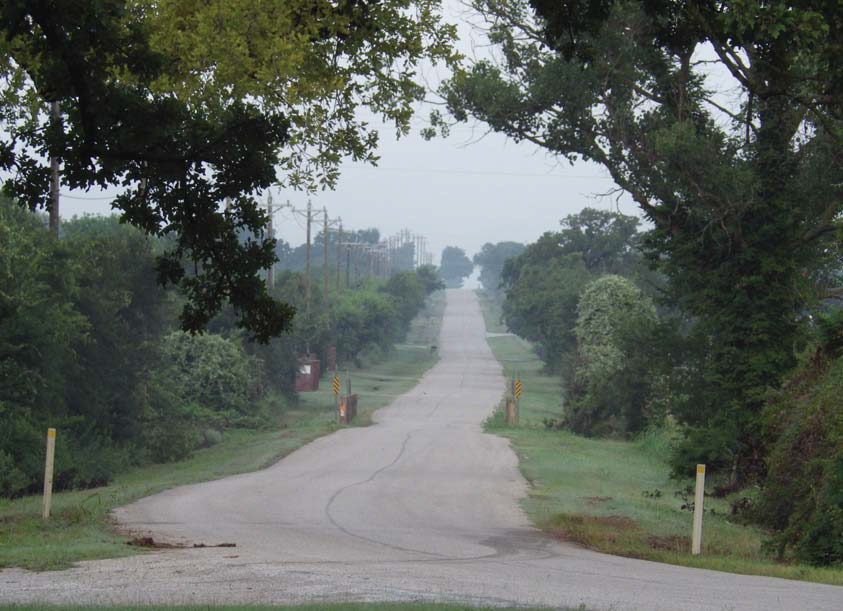
Certainly, people knew that a real road between Dublin and Stephenville needed to be built, capable of carrying heavy traffic. It was important for travelers and local farmers so they could come to Dublin for supplies and bring crops to market. In September of 1913 people met at the Greens Creek Baptist Church to discuss the possibility of creating a better road that would serve the community.
Three possible routes were discussed. The one decided on was called the middle route. It was also the shortest route by 2 miles. That roadway started at Patrick Street continued past the Greens Creek Baptist Church and then on to Stephenville. (Dublin Progress, September 26, 1913)
It was determined that it would cost $100 dollars per mile to establish the road and prepare the surface so that it could be traveled easily. Some referred to the road asa“pike.”Community leaders in Dublin, Greens Creek and Stephenville were assigned the job of raising the money to complete the project. (Dublin Progress, September 26, 1913)
Pledges from citizens in Dublin and Stephenville and many local farmers were for cash and others were for work by men and teams. A federal government engineer was pledged for helping to make for the proper building of the highway. (Dublin Progress, October 3, 1913) Some wonder why country roads have so many twists and turns. Part of getting farmers to donate land was agreeing to place the road close to their homes. The roads would create the path from one property to the next, following the wishes of the farmers. The farmers generosity helped with the final completion of the project.
Little did they know that just a few years later that same road would become one of the first 25 roads established by the State of Texas as State Highway 10.