
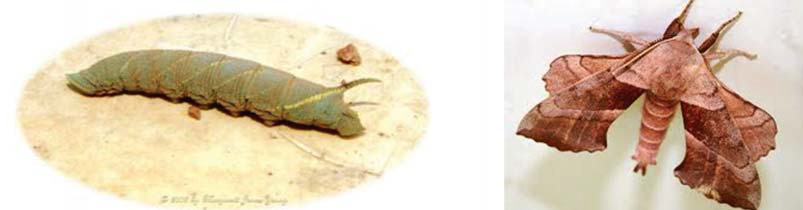

The old saying what goes around comes around is true in the case of the Walnut Sphinx Caterpillar. Back in 2012 we had the first outbreak of this caterpillar that most had ever seen. Well, 12 years later they are back and working to defoliate pecan trees.
The pecan growers in the county and area have had a bushel basket full of issues to deal with and now this one is back. This caterpillar is very uncommon in Texas and is usually not known to be a pest to pecans.
Typically, the caterpillar does not occur in large enough numbers to cause much economic loss, but when they do, they can really do some damage and numbers in some orchards have been already high this spring. The caterpillar looks very much like a tomato horn worm but has a white or yellowish line that connects to the horn that serves as a distinctive characteristic.
Typical locations of the worst outbreaks are either unmanaged orchards or orchards that receive minimal management.
We believe those orchards that are treated with Intrepid or another growth regulator insecticide for Pecan Nut Casebearer get control of the caterpillars when they were small. Once the caterpillars get large, it will take a good broadspectrum insecticide to get good control. There is no known threshold level for treatment, just watch for leaf defoliation and be ready to spray.
For homeowners with infestations control may be difficult- using a broadspectrum caterpillar insecticide that is labeled for homeowner use will be your best bet. The liquid form of carbaryl 23.7 % or 50 % malathion. The biggest problem is getting your tree sprayed. Whatever you use be sure to follow the label directions.
The caterpillar is more common in the east and can have up to four generations in a single season. Back in 2012, in unsprayed trees and orchards we had a mixture of generations of large and small caterpillars, and they just continually defoliated the trees. Due to drought, extreme heat, and cold, our pecan trees are very stressed, and most could not stand this continual defoliation this year. I encourage you to get out and check your trees now while the caterpillars are still smaller and a little more easily controlled.