

Pecan Aphids
This is one of the worst years I have seen for pecan aphids in the county. A good rain is the best treatment, but as you all know any rain is eluding us this far into late summer. I asked Kyle Slusher, Texas A&M AgriLife Assistant Professor and Extension Entomologist to share some information on aphid scouting and treatment. We also have Kyle’s list of aphid control products available at the office.
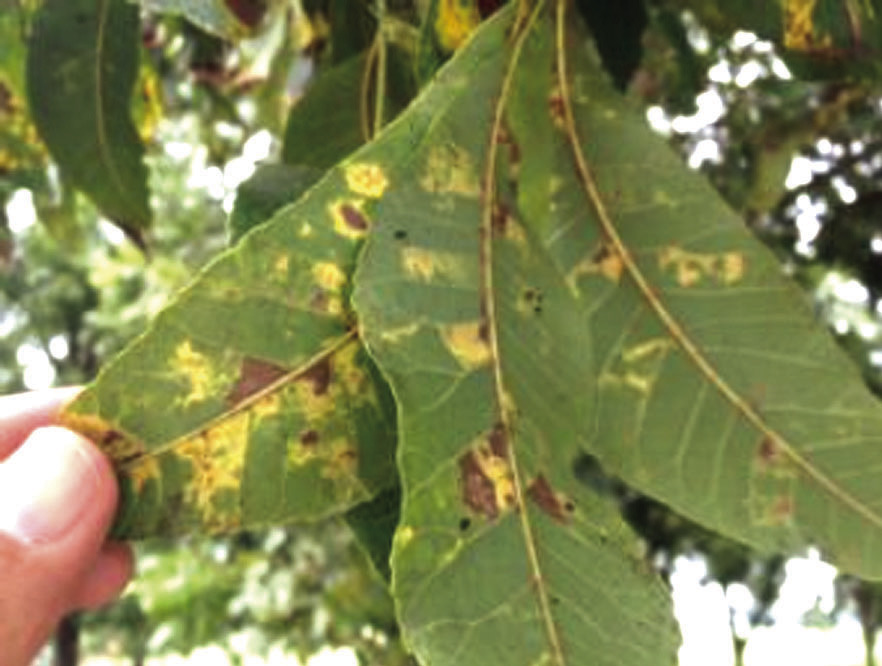
Heavy infestations of pecan aphid have been seen throughout Comanche County this fall. Three species of leaf feeding aphids feed on pecan trees in Texas: yellow pecan aphid, black margined aphid, and black pecan aphid. All three species of aphid spend most of their time sucking sap from the leaves which removes carbohydrates and water from the leaves, reducing resources needed for development of nuts. A highly visible issue with aphid feeding comes from honeydew excreted as a byproduct of feeding. Honeydew coats the leaf, giving it a glossy appearance. Honeydew on pecan foliage that is not removed by rainfall serves as a substrate for the growth of sooty mold on pecan leaves, which reduces photosynthesis. The feeding biology of the black pecan aphid causes another issue not seen with the black margined aphid or the yellow pecan aphid; its feeding elicits leaf chlorosis (yellowing of the leaf) around the feeding site. This damage is easily detected as large yellow blotches on the leaves. Over time, the chlorotic area will die and turn brown. Black aphids are a more serious pest than either the black margined aphid or the yellow pecan aphid because lower populations cause serious leaf damage and may defoliate a pecan tree.
To monitor for pecan aphid, it is recommended to check all the compound leaves on 10 terminals per tree on at least 10 trees per orchard. For yellow pecan aphid and black margined aphid, treat if the number of aphids exceeds 25 per compound leaf. For black pecan aphids, prior to July 1, if 25% of terminals have two or more black aphids, treatment should be applied. After July 1, treatment should be applied if 15% of terminals have more than one black aphid. We are currently well above these thresholds on many trees and in many orchards in the county.
Several insecticides are available for pecan aphids, but it is important to rotate between insecticide classes to avoid the development of resistance in pecan aphid populations. Caution should be taken when applying pyrethroid (IRAC class 3A) insecticides as these can lead to aphid population rebounds. In addition to insecticides, gibberellic acid can be used to prevent black aphid feeding and inhibits establishment in the orchard. Gibberellic acid interferes with the feeding biology of the black pecan aphids and does not directly affect yellow pecan aphid. It is not effective once black aphids have been established in the orchard.
Well timed applications of foliar insecticides can knock back aphid populations. However, growers must remember to scout often to reduce populations before damage associated with these aphids builds up. Honeydew is difficult to remove once it has coated the leaf and black aphid chlorotic damage is irreversible once it has formed. Even this late in the year, it is important to protect canopy as much as possible.